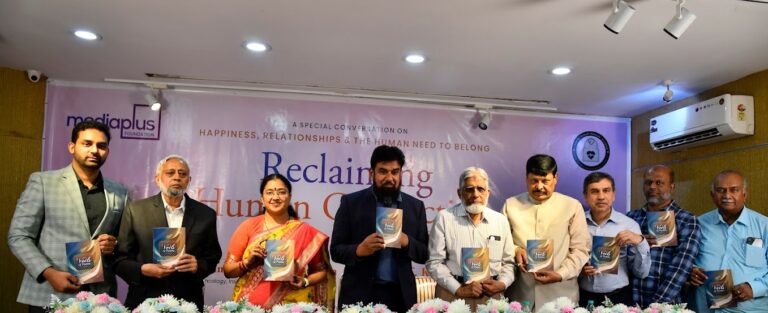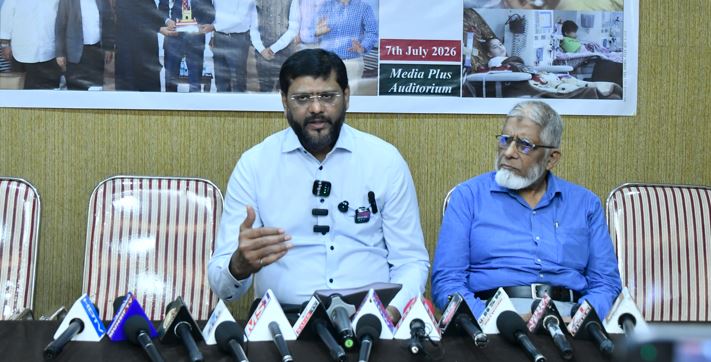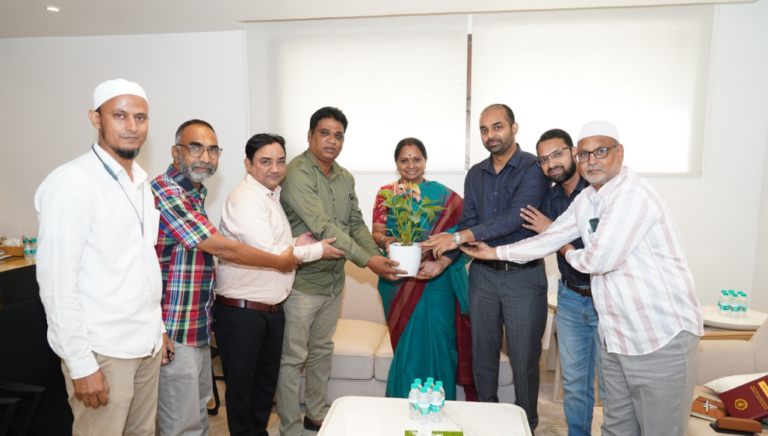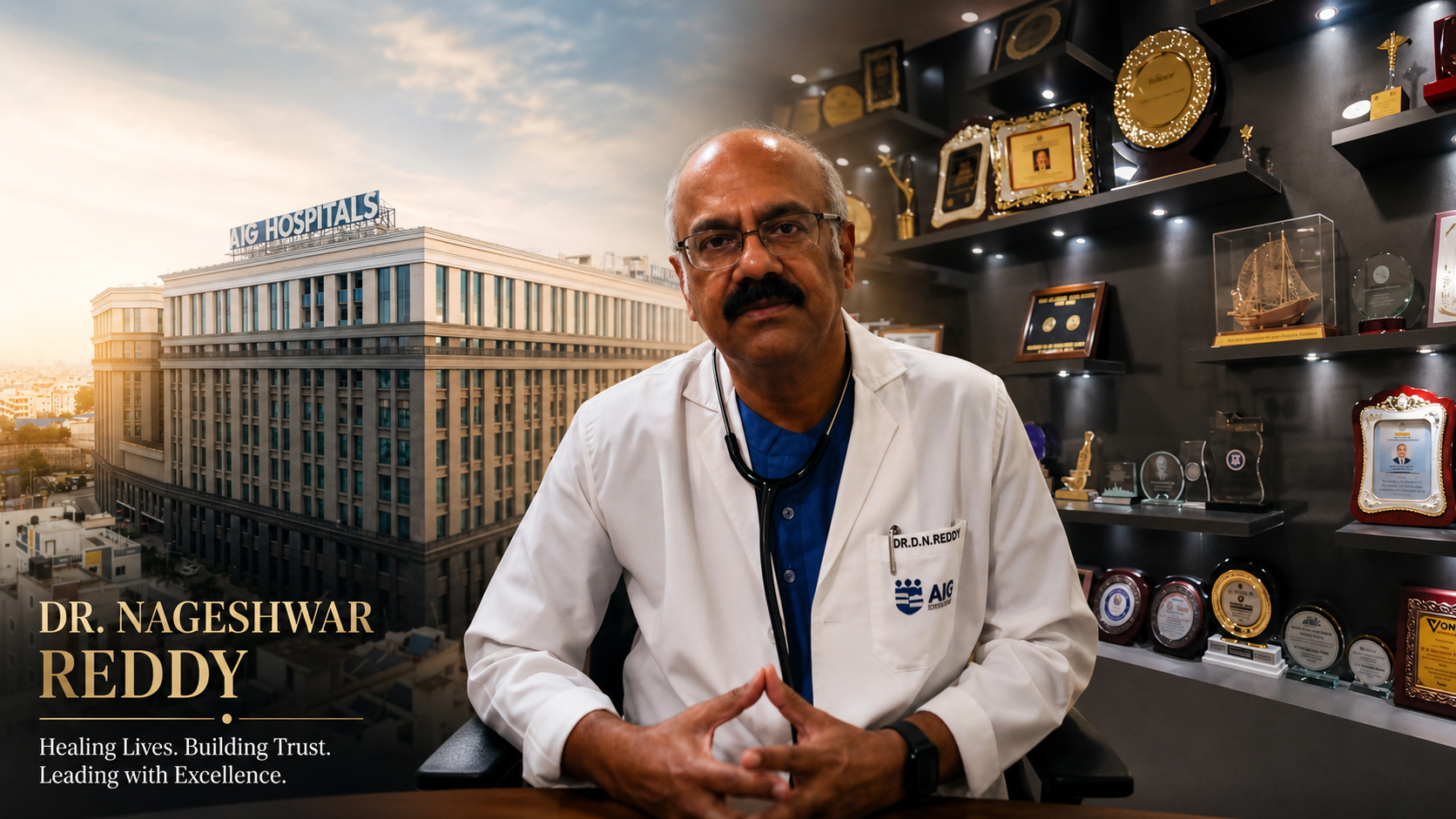
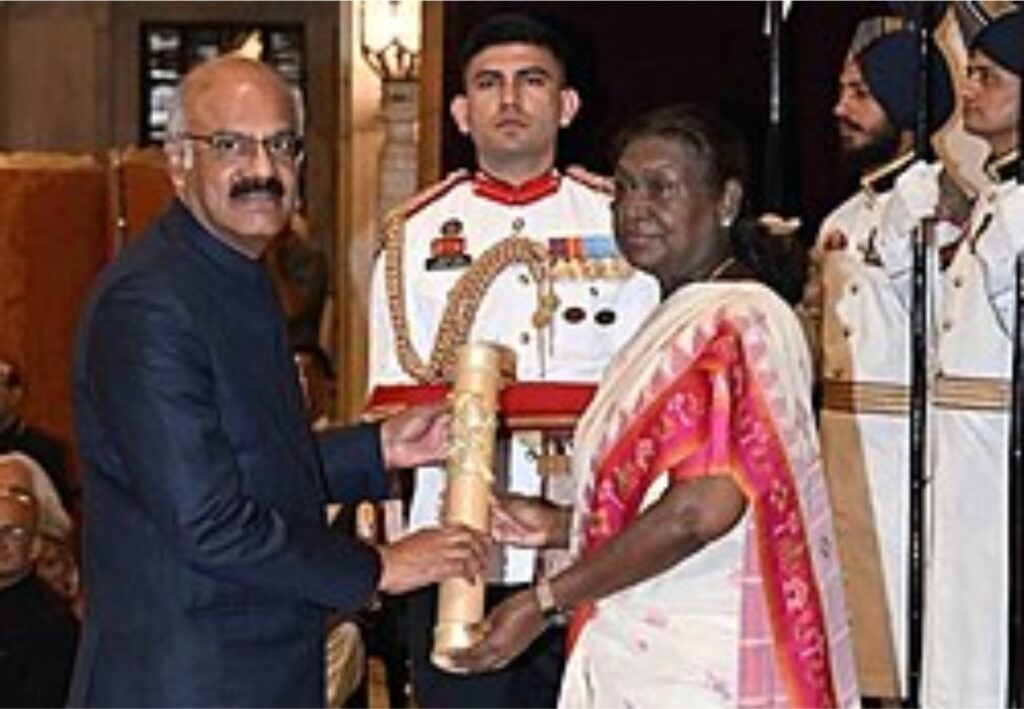
Hyderabad, May 26: Every citizen must have access to equitable healthcare. The burden of healthcare in India is unlike most countries where healthcare expenditure is borne by the citizen out of pocket. In most countries, healthcare is paid for by insurance, remarked Padma Vibhushan Dr. Nageshwar Reddy.
In a candid conversation, Dr. Nageshwar Reddy, who is also the Chairman of AIG Hospitals and India’s only doctor to be awarded all the three Padma awards – Padma Shri (2002), Padma Bhushan (2016) and Padma Vibhushan (2025), says “India remains one of the few countries where the burden of healthcare costs still falls squarely on the individual’s pocket.”
Dr. Reddy points out. “Everywhere else, healthcare is largely cushioned by robust insurance or state backing. While government initiatives like Aarogyasri are steps in the right direction, they simply do not cover the systemic gap. The grim reality is that nearly 70% of our population is still not receiving the quality healthcare they deserve.”
When asked how global recognition to AIG has changed Hyderabad, Dr Reddy humbly says “Hyderabad has long been established as India’s premier healthcare hub, a bustling destination where medical advancements attract patients from across the globe. He says the true metric of success isn’t revenue – it is equity and access.
Proposing a radical overhaul of how private healthcare operates in developing nations: a combined private-public blueprint where corporate entities voluntarily step up to equalize the field.
To bridge this massive socio-economic divide, Dr. Reddy’s calls for a structural handshake between private stakeholders and the state. “The major deficiency in our system is our inability to reach the people,” he explains. “If private stakeholders collectively decide that 30% of their healthcare services will be provided entirely free of cost, we can cover a massive portion of the underserved population. But the private sector cannot do it alone.”
“At AIG, we try and ensure that maximum number of patients can be accomodated as part of our care for the society”
“If the government can put in a higher percentage of the national budget, aggressively moving our healthcare spending from the current 2% of GDP to at least 3%, it will make a huge difference,” he said.
When AIG first opened its doors in Somajiguda back in 2004, the healthcare landscape of Hyderabad was vastly different. Today, the Gachibowli mega-campus functions as a colossal teaching hospital ecosystem. It is powered by 10,000 staff members, including 1,000 doctors, 600 senior consultants, and over 400 actively engaged PhD, DNB, and medical students.
“Unlike traditional corporate setups, we chose to heavily concentrate our resources on research and academics,” says Dr. Reddy. This focus translates into an astonishing output of 400 to 500 dense, top-tier peer-reviewed research articles published by AIG’s consultants and researchers every single year.

This relentless pursuit of science has led to profound, localized discoveries that Western medical textbooks often overlook. “We discovered a completely new gene responsible for chronic pancreatitis in our population, alongside uncovering the specific genetic mutations that cause ulcers and gallbladder stones unique to patients in this region. This level of breakthrough only happens when an institution prioritizes indigenous science over mere commercial turnover.”
Padma Vibhushan Dr. Nageshwar Reddy takes pride in mentioning his lineage is from a middle-class family. “I had absolutely no background of financial support or otherwise. “To build an institution like this, you have to sacrifice. I have been working 18 hours a day, from 7:00 AM to 1:00 AM, through Sundays, for the last 40 years. Even today, that routine hasn’t changed.”
It is a pace that requires an immense family toll. “My father, a scientist, was my ultimate inspiration. But my wife, my daughter, and now my two grandchildren have sacrificed a tremendous amount of time that I simply could not give them. Family sacrifice is truly the biggest sacrifice I had to make.”
Now, watching a world fractured by geopolitical conflicts and increasing societal polarization, the legendary gastroenterologist feels a deep sense of urgency. His life’s work has taught him that human health and life are far too fragile to be taken for granted.
“I am deeply frightened by what is happening globally today,” Dr. Reddy confesses. “Look at the wars. We live in an era where a single button can destroy everything humanity has built over centuries in a matter of seconds. In times like these, we must realize that barriers are artificial. Unless we learn to be genuinely good and kind to each other, we cannot sustain.”
He adds that both wealth and fame are transient variables in a very short human existence and the nation’s privileged classes must contribute to sustain the very fabric of an equitable society.
“There is absolutely no point in accumulating endless wealth. Our stay in this world is brief, and your work is the only thing that ultimately stands out. You must never aim purely for personal benefit. If even 10% of our society’s capable people decide to actively give back their acquired knowledge and resources to the community, it will be more than enough to sustain equitable healthcare for everyone.”