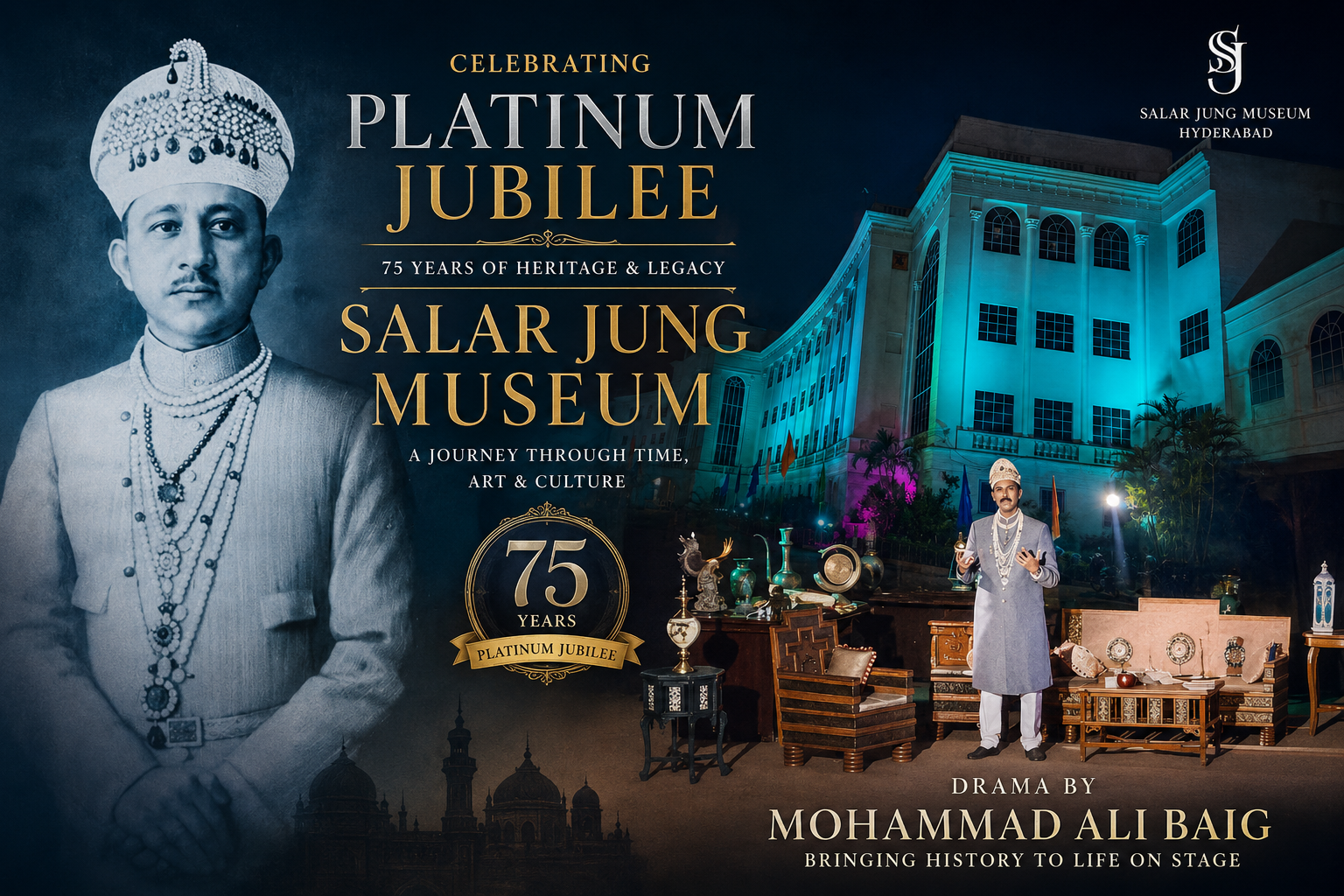
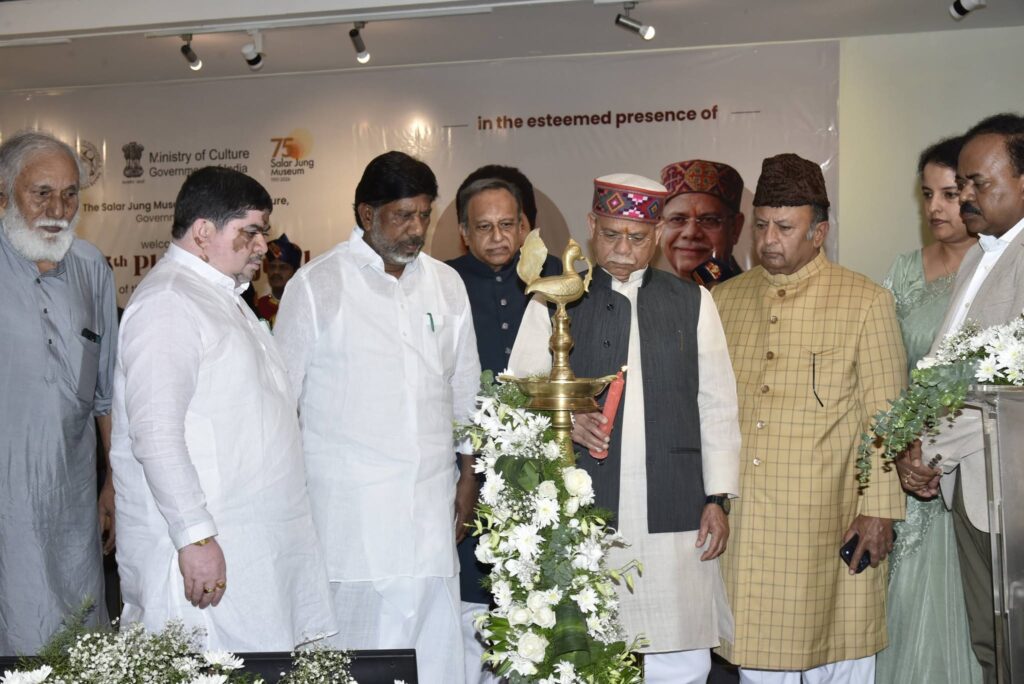
Hyderabad: Marking the 75th anniversary of the Salar Jung Museum, a grand theatrical production on the life and legacy of Nawab Mir Yousuf Ali Khan, Salar Jung III (1889–1949) was inaugurated by Telangana Governor Shiv Pratap Shukla in the presence of Telangana Deputy Chief Minister Mallu Bhatti Vikramarka, Telangana Minister Ponnam Prabhakar, Charminar MLA Mir Zulfeqar Ali, Museum Director Ms. Priyanka Mary Francis, IAS, members of the Salar Jung family, historians, cultural personalities and theatre enthusiasts.
The production, conceived and directed by noted theatre personality Padma Shri Mohammad Ali Baig plays Salar Jung. Madhu Swaminath as the novelist and Vijay Kumar as Askar Ali fortify his on-stage presence with their powerful performances. The production celebrates not only the life of Salar Jung III but also the remarkable legacy of the Salar Jung family, whose members played a defining role in shaping the history of Hyderabad State.
The historic Diwan Deodi, from where the Salar Jung family administered state affairs and nurtured one of the world’s most extraordinary private collections, occupies a central place in the narrative. It gave Hyderabad three Prime Ministers. The sprawling palace originally housed his priceless collection that would eventually embellish the world-renowned Salar Jung Museum.
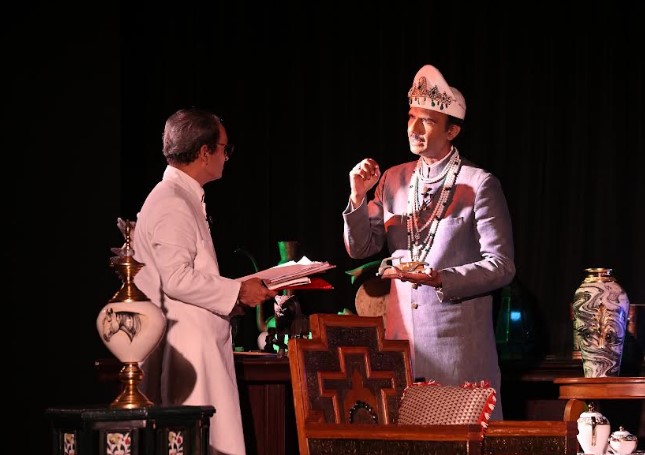
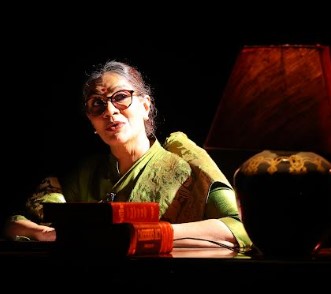
The play recreated Salar Jung III’s presence so vividly that audiences felt they were listening to the man himself. It traced the lives and contributions of the illustrious Salar Jung family, particularly Nawab Mir Turab Ali Khan, Salar Jung I (1829–1883), one of Hyderabad’s greatest reformers and statesmen, Nawab Mir Laiq Ali Khan, Salar Jung II (1856–1889) and Nawab Mir Yousuf Ali Khan, Salar Jung III, whose passion for art and heritage transformed him into one of the greatest collectors of his age.
Conceived by the Qadir Ali Baig Foundation in collaboration with Salar Jung Museum and the Indian Ministry of Culture, the play is written by noted writer F.M. Saleem and narrated largely through the words and reflections of Salar Jung III himself, and offered audiences an intimate glimpse into the life of a man whose fascination with collecting began in childhood. As a young boy, he spent much of his pocket money acquiring rare toys and curiosities. Even as a child, Salar Jung III was meticulous and particular about his toy collection, and would carefully place the toys back after playing, as if it were a prized possession. This passion later evolved into a lifelong mission to preserve humanity’s artistic and cultural heritage.
Salar Jung III as a humble and approachable child despite his aristocratic background. Free from ego and privilege, he mingled with fellow students and participated in games and activities like any other child, rather than carrying himself like a prince.
As the story progresses, audiences witness his transformation from a curious collector into a legendary patron of art. His appreciation extended across rare jewellery, manuscripts, paintings, sculptures, clocks, textiles, decorative arts and objects of exceptional craftsmanship from lands near and far.
One of the central themes of the play is Salar Jung III’s belief that true value lies beyond material wealth. He famously regarded books and manuscripts as treasures that adorn the soul, while jewellery merely adorns the body. To him, every artifact represented a story, a fragment of history and a testimony to the genius of its creator.
The production vividly captures his admiration for artistic masterpieces, including, among many artifacts, the celebrated Veiled Rebecca, which he describes as resembling moonlight trapped within stone revealing the depth of his artistic sensibilities and his ability to appreciate beauty beyond its physical form.
The play also highlights his tireless efforts to rescue and preserve remnants of fading civilizations. Whether it was a rare manuscript, a historical document, or a forgotten artifact, Salar Jung III saw each object as a witness to history. He often acquired pieces not for personal possession but to ensure that the stories of kingdoms, artists and cultures would survive for future generations.
The people of Deccan affectionately referred to him as “Muhafiz-e-Fun” (Guardian of Art) and “Tehzeeb Ka Rakhwala” (Custodian of Culture). Defending the substantial sums he paid for rare masterpieces, he would often remark that some things cannot be measured in money. Such priceless objects, he believed, were not commodities but stories of time itself.
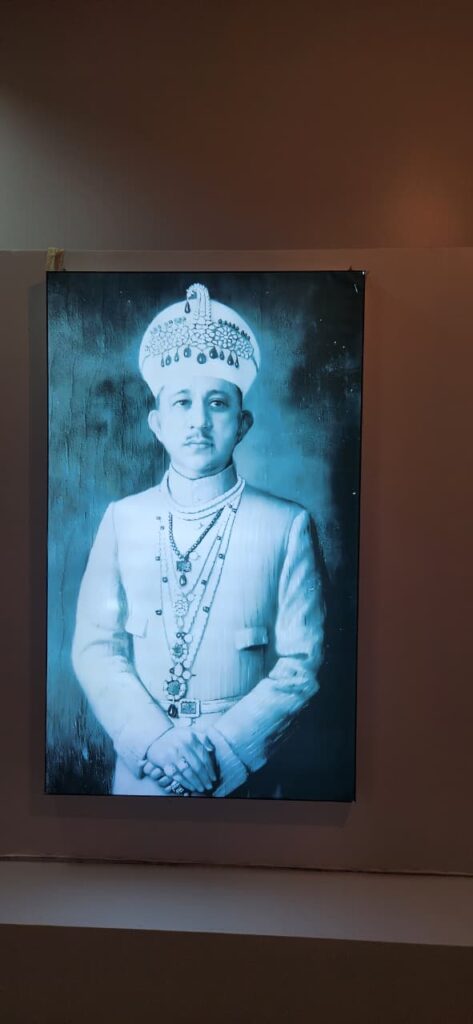
A particularly moving aspect of the narrative is his decision to keep his magnificent collection in Hyderabad. Despite opportunities to house it elsewhere, including Pune, he envisioned Hyderabad as the permanent home of the treasures he had assembled from across the world. His dream was that future generations would not merely view the objects but also understand the histories, artists, civilizations and cultures that produced them.
Today, that vision lives on through the Salar Jung Museum, which he meticulously planned for during his lifetime but didn’t live to see its bewitching charms. The Museum was only brought to life posthumously in 1951, and now it is one of India’s most celebrated cultural institutions.
Speaking after witnessing the play, Telangana Deputy Chief Minister Mallu Bhatti Vikramarka paid rich tributes to Salar Jung III, describing him as “a visionary who thought far beyond his era and devoted his life to collecting and preserving the artistic achievements of humanity.”
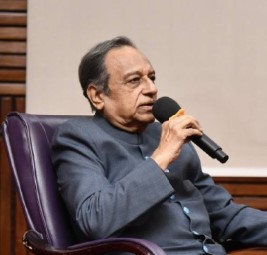
Among those who shared personal memories was Nawab Ehteraam Ali Khan, great-grandson of Salar Jung III, who described his illustrious ancestor as an exceptionally humble, affable and friendly individual who would invariably greet people wherever he went. Recalling family anecdotes, he noted that Salar Jung III’s passion for collecting and preserving toys was evident from an early age. His family recognized this fascination and believed that the young boy was destined for greatness.
Mohammad Ali Baig said that “bringing the heroes of the Deccan to centre stage” remains one of his enduring missions.
“While audiences frequently encounter productions based on Shakespeare and other international classics, presenting the stories of the Deccan’s own heroes provides a unique sense of fulfilment and cultural pride”, he added.
Charminar MLA Mir Zulfeqar Ali urged the government and cultural institutions to further support historical theatre and take such productions to audiences across India and the world.
The production also pays homage to the broader cultural and intellectual world of Hyderabad during the Salar Jung era.
More than a collector, Salar Jung III emerges as a guardian of memory, a protector of culture and a custodian of civilization who understood that while empires may fade, the stories they leave behind deserve to endure.
Seventy-five years after the museum opened its doors, his legacy continues to inspire scholars, artists, historians and countless visitors who walk through its galleries and encounter the world he painstakingly preserved for posterity.