 Gawah (The Witness) – Hyderabad India Fearless By Birth, Pristine by Choice – First National Urdu Weekly From South India – Latest News, Breaking News, Special Stories, Interviews, Islamic, World, India, National News


UK Charity and Palestine Embassy Sign MoU to Help Hyderabad Channel Lifesaving Meds to Gaza
As medicines run out and hospitals struggle to function, an international humanitarian partnership aims to create a new supply line from India to one of the world’s worst medical crises.
Hyderabad, July 7
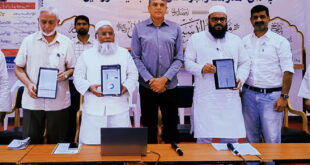
The signing of a Memorandum of Understanding (MoU) in Delhi on Monday was no ordinary institutional agreement. There were handshakes, photographs and formal exchanges between representatives of humanitarian organisations.But the underlying purpose was far greater – saving lives.
The agreement marks the beginning of an effort to establish Hyderabad as a logistical hub for collecting and channelising medicines and medical supplies to Gaza, where doctors say the healthcare system has been pushed to the edge by months of relentless conflict.
The initiative is being spearheaded by the UK-based humanitarian organisation Doctors of Rahman, which has spent the past several years delivering medical assistance in conflict zones and, more recently, building international support networks for Gaza.
Speaking after the signing, the organisation’s founder, Dr. Yousufuddin Shaik, described a crisis where shortages are no longer confined to specialised treatments but extend to medicines that doctors elsewhere would consider routine.
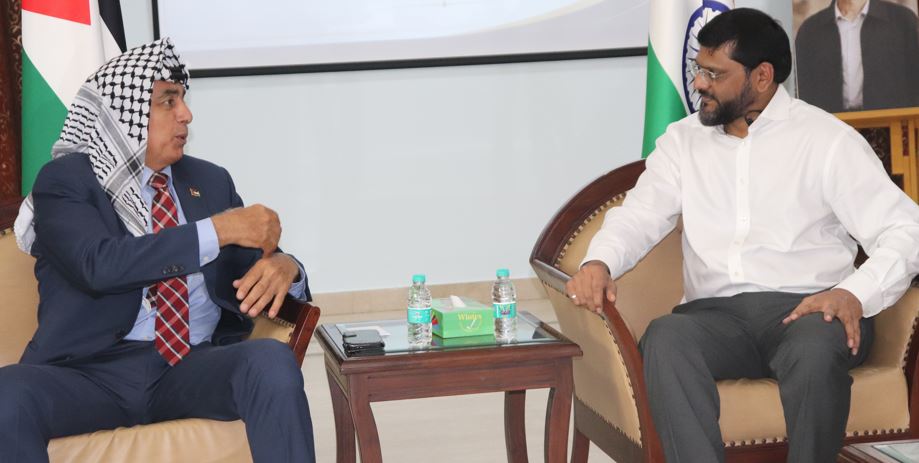
“There are patients who cannot receive cancer treatment. There are people losing their eyesight because even basic glaucoma eye drops are unavailable. Pain relief, anaesthesia, antibiotics – everything is running acutely short,” he said.
The figures illustrate the scale of the challenge.
Aid agencies estimate that tens of thousands of truckloads of humanitarian supplies are required to meet Gaza’s needs, yet only a small fraction is able to enter because of continuing logistical and political constraints. According to the Palestinian government, Dr. Yousufuddin says, “50,000 trucks are needed every day in Gaza, but we barely have 5000 trucks entering ni Gaza each month. Imagine the gap in supply and demand.”
Even when relief reaches border crossings, movement into affected areas remains uncertain.
Against this backdrop, Doctors of Rahman has attempted to bridge some of the gaps.
The organisation recently facilitated the delivery of 20,000 tonnes of specialised therapeutic nutrition for vulnerable populations in Gaza and arranged six months’ worth of orthopaedic surgical equipment for hospitals treating trauma victims.
Yet Dr. Shaik insists these shipments barely scratch the surface of what is required. “The medicines are simply running out,” he said. The consequences are visible across Gaza’s healthcare system.
Only three major hospitals – Shifa, Al Aqsa and Nasser – continue to function in limited capacities, alongside 19 partially operational hospitals struggling with shortages of electricity, equipment and trained personnel. Most of the equipment is running on generators, and electricity is largely sourced through make-shift solar catchpoints at these institutions.
Poor sanitation and the collapse of municipal services have accelerated the spread of infectious diseases, while widespread malnutrition has weakened thousands of patients already living under extraordinarily difficult conditions.
But perhaps the most remarkable story emerging from Gaza is not only about those treating patients today. It is about those preparing to become tomorrow’s doctors.
With universities destroyed during the conflict, medical education has been forced into tents, temporary shelters and open spaces powered by small solar installations. Doctors of Rahman has brought together an international network of nearly 800 volunteer physicians from the United Kingdom, Canada, Malaysia, Indonesia, the United States and several other countries to teach Palestinian medical students online. Apparently, physical classrooms were literally obliviated by the bombings.
More than 179 specialists now deliver structured lectures remotely, allowing students to continue their studies despite the destruction of their campuses. Some examinations, Dr. Shaik recalled, are conducted on the Mediterranean shoreline because few buildings remain suitable for large gatherings.
“Their resilience is extraordinary,” he said. “They are determined to become doctors and rebuild Gaza’s healthcare system.”
The quality of the digital teaching programme has attracted academic recognition beyond Palestine, with Egypt’s Al-Azhar University incorporating several of the lectures into its own curriculum.
The organisation has also helped relocate displaced medical students abroad, enabling around 100 students to continue their education in South Africa, 70 in Malaysia, while others have secured opportunities in the United Kingdom and elsewhere where the charity is making quiet inroads to save humanity.
Founded in 2005, Doctors of Rahman has previously undertaken humanitarian interventions during communal violence in Gujarat, floods in Odisha and other disaster-affected regions before expanding internationally.
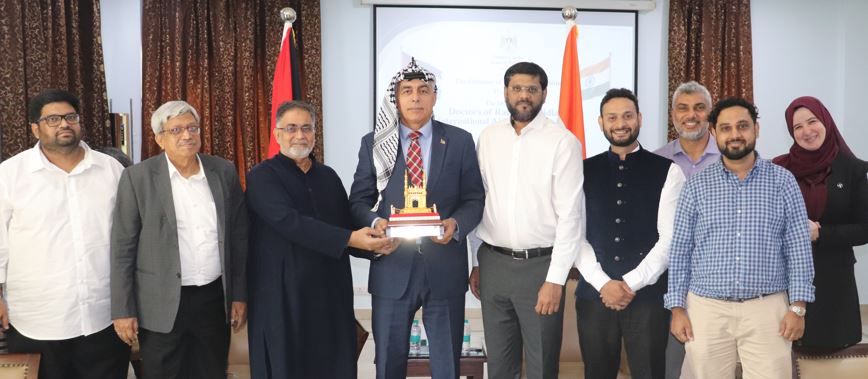
The Hyderabad centre envisaged under the new MoU is expected to coordinate the collection of internationally standardised medicines and work with established humanitarian channels to deliver them into Gaza. For the organisations involved, the agreement is more than an administrative document.
“Incidentally, the first voice in support of Palestine was raised in the shadows of Charminar nearly 50 years ago. Hyderabad has an emotional and long-standing connection with Palestine and its people, and has always been at the forefront of providing humanitarian aid. That is all we seek. We don’t need money, we need medicines and medical aid”, he added.
The developments represent an attempt to ensure that a city known for its medical institutions and pharmaceutical industry can contribute, however modestly, to sustaining healthcare in a place where every consignment of medicines may determine whether a patient lives, a surgeon can operate, or a young medical student eventually fulfils the promise of becoming the doctor that Gaza will one day desperately need.