OpenAI has announced a new academic access plan for GPT-Rosalind, its specialised AI model for life-sciences research. The Rosalind Academic Plan offers eligible university labs in the United States up to 30 sponsored ChatGPT Business Standard seats for as long as 12 months, alongside access to GPT-Rosalind after approval. The plan is intended to help researchers use AI tools in scientific workflows, but it does not replace laboratory evidence, peer review or expert judgement.
Scheduled publication: 16 October 2026 | AI Asked
What is the Rosalind Academic Plan?
OpenAI announced the plan on 15 October 2026. According to the company, eligible academic labs can apply for up to 30 Business Standard seats at no cost for up to 12 months. Approved labs can also access GPT-Rosalind, subject to a trusted-access review. The offer is currently limited to academic labs at US universities.
OpenAI says the plan is designed for research workflows such as reviewing scientific literature, working with research data and developing analysis code. The company says research data shared through the plan is not used to train its models by default.
Primary source: OpenAI’s official announcement: Bringing GPT-Rosalind to academic research labs.
What is GPT-Rosalind?
GPT-Rosalind is a specialised model family designed to support life-sciences research. OpenAI describes it as combining scientific reasoning with tools for workflows involving areas such as medicinal chemistry, genomics and other biological research. The model is intended to help researchers explore questions, organise information and work through analytical tasks.
Specialisation does not make an AI model an authority on biology. Its suggestions can be incomplete, based on incorrect assumptions or unsuitable for a particular experiment. Researchers need to check claims against the literature, inspect data and use appropriate experimental and institutional review processes.
Who can apply—and what is included?
- Eligible applicants: principal investigators and lab leads at eligible US universities.
- Sponsored seats: up to 30 ChatGPT Business Standard seats for up to 12 months, subject to approval.
- Model access: access to GPT-Rosalind following the trusted-access review, plus commercially available frontier OpenAI models subject to plan limits.
- API access: OpenAI says API access is not included in this academic plan at launch.
- Existing enterprise agreements: labs at institutions with an existing OpenAI Enterprise agreement must use their institution’s access process.
Eligibility and approval matter: the announcement is not a blanket offer for every student, independent researcher or university worldwide. Indian institutions should not assume they can apply under the current US-university programme.
Why does AI matter in scientific research?
Scientific work often involves reading large bodies of literature, comparing results, preparing analysis code and deciding which questions deserve further investigation. AI tools may help with some of these tasks, giving researchers more time to interpret evidence and design their work.
However, a plausible-looking explanation is not a validated result. Research teams must distinguish model-generated suggestions from experimentally measured findings, document methods, protect sensitive data and independently reproduce important results. In biology and medicine, additional safeguards may be needed depending on the research area and its potential risks.
What does this mean for researchers in India?
The current academic plan is restricted to eligible US university labs. Researchers in India can still follow OpenAI’s wider GPT-Rosalind programme and the company’s trusted-access requirements for eligible organisations, but they should check the applicable terms rather than assume the sponsored academic offer is available locally.
For Indian universities, the broader lesson is that access to specialised AI is only one part of research capacity. Institutions also need scientific computing resources, data governance, trained researchers, ethics oversight and the ability to validate AI-assisted findings.
Frequently asked questions
Is GPT-Rosalind free for all students?
No. The newly announced academic plan is for approved labs at eligible US universities and offers a limited number of sponsored seats. It is not a general free subscription for all students.
Can GPT-Rosalind conduct experiments by itself?
The model can support parts of research workflows, but the announcement does not mean it independently performs or validates laboratory experiments. Researchers remain responsible for methods, safety and results.
Can Indian universities apply for this academic plan?
OpenAI currently describes the Rosalind Academic Plan as available to academic labs at US universities. Indian institutions should check official eligibility updates before applying.
The bottom line
OpenAI’s academic plan is an attempt to put specialised AI tools in the hands of more researchers. Its value will depend on how scientists use the tools, how carefully they verify outputs and whether AI assistance helps produce reproducible research. The programme is a targeted US academic offer—not yet a worldwide student benefit.
Sources and further reading
- OpenAI: Bringing GPT-Rosalind to academic research labs (15 October 2026)
- OpenAI: Introducing GPT-Rosalind for life-sciences research
- OpenAI Help Center: Rosalind Academic Plan eligibility and application guidance
Explore more: AI Asked on GAWAH · Can AI Help Create Climate-Resilient Jowar?
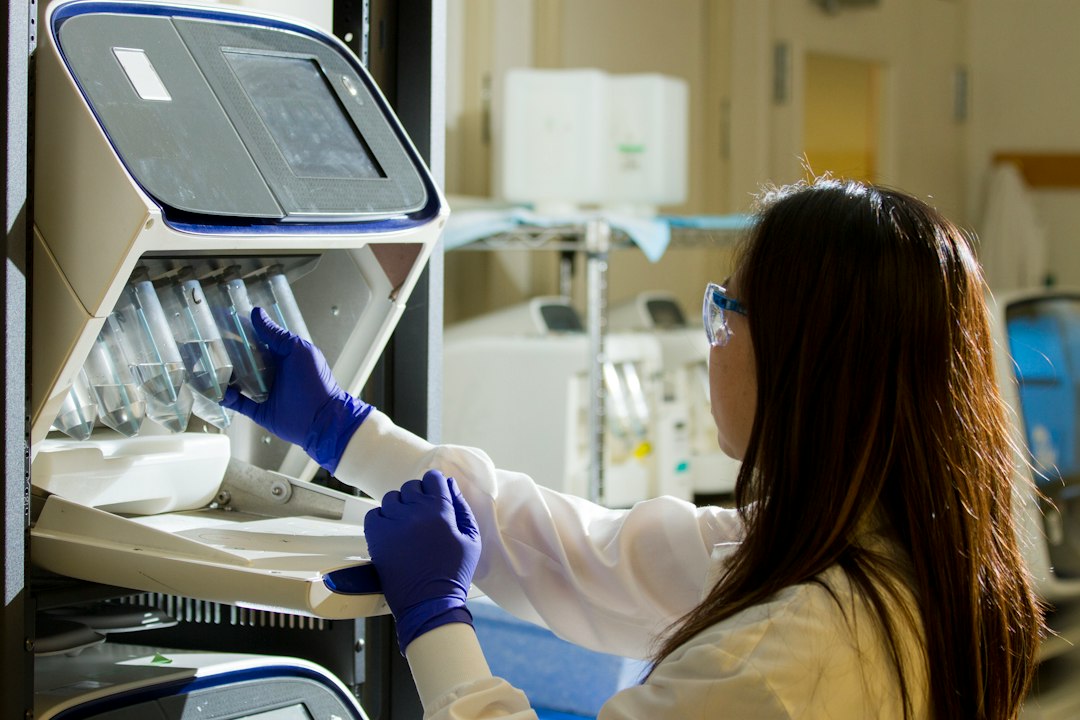
Image credit: National Cancer Institute / Unsplash.