Artificial intelligence could help researchers understand how to breed more resilient jowar varieties. Google DeepMind, Google.org and Hyderabad-headquartered ICRISAT have announced a collaboration to build an open-access genetic atlas of sorghum, a crop known in India as jowar. The aim is to help scientists identify promising combinations of plant traits more efficiently—not to claim that AI has already produced a climate-proof crop.
Published: 16 October 2026 | Category: AI Asked
What has Google announced?
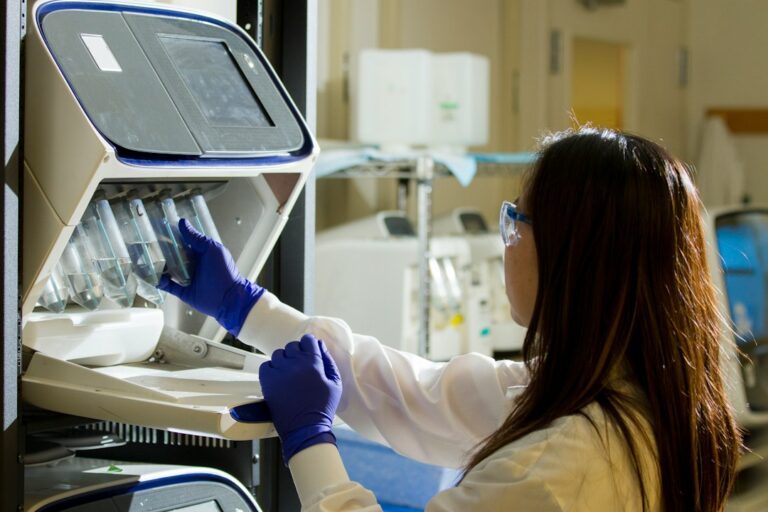
In an announcement published on 15 October, Google said Google DeepMind and Google.org, through the AI Collaborative for Food Security, are working with the International Crops Research Institute for the Semi-Arid Tropics (ICRISAT), the HudsonAlpha Institute for Biotechnology and the University of Washington’s Department of Genome Sciences. The partners plan to create an open-access genetic atlas of sorghum, drawing on a representative sample from ICRISAT’s genebank.
Google says the collection contains more than 44,000 distinct seed samples from over 90 countries. The project will combine advanced genetic analysis with machine learning to help researchers identify promising plant combinations. The intended users include crop breeders and scientists working to develop sorghum varieties with improved productivity and resilience.
Primary source: Google’s official announcement, “From lab to impact: Advancing AI for real-world progress in India”.
Why does jowar matter?
Sorghum—called jowar in Hindi and jonna in Telugu—is an important cereal in parts of Asia and Africa. It is used for human food and animal feed, and some varieties also have industrial uses. ICRISAT notes that sorghum can grow in hot, semi-arid conditions where water is limited, making it relevant to farming systems exposed to heat and drought.
That resilience does not mean every sorghum variety performs well under every condition. Yield, maturity, grain quality, pests, diseases and the needs of farmers differ by region and intended use. Breeding therefore involves finding and testing combinations of traits rather than searching for one perfect seed.
Primary source: ICRISAT’s sorghum overview.
How could AI help crop scientists?
Plant genomes contain large amounts of information about inherited traits. Researchers can compare genetic variation across plant collections and investigate which variations may be associated with characteristics such as drought tolerance, maturity or grain quality. Machine-learning methods can help analyse complex datasets and prioritise patterns for further investigation.
A genetic atlas can make this information easier for researchers to explore and compare. Instead of beginning every investigation from scratch, breeders may be able to use the catalogue to narrow the range of candidates they need to study. This could make parts of the research process more efficient, although any promising finding still needs scientific validation and field testing.
AI does not independently establish that a genetic combination will perform well on a farm. Crop performance depends on interactions among genes, weather, soil, farming practices and local conditions. A prediction made from data is a lead for researchers—not a substitute for trials.
What is the Hyderabad connection?
ICRISAT is headquartered at Patancheru, near Hyderabad, and has a long-standing research focus on crops suited to the semi-arid tropics. The new collaboration places a Hyderabad-based agricultural research institution at the centre of an international effort involving AI and genomics.
Google also announced support for a three-year postdoctoral fellowship at ICRISAT. The stated goal is to help develop tools that can characterise genomes for other important crops, including chickpea, groundnut and pigeon pea. The announcement describes this as Google DeepMind’s first such fellowship in India and its first outside the United Kingdom.
Primary sources: ICRISAT’s official website and Google’s project announcement.
Will farmers get better seeds immediately?
No. The announcement describes a research resource intended to support future breeding work. It does not announce a newly released jowar variety, a commercial seed product or a timetable for farmers to receive seeds developed through the project.
Before a new variety can make a difference in farmers’ fields, researchers and agricultural partners need to establish that it performs reliably, meets local needs and is suitable for the intended growing conditions. Seed multiplication, access, affordability and farmer adoption also matter. The genetic atlas may help scientists prioritise their work, but it is one part of a longer research and delivery process.
What should readers watch for next?
- Access to the atlas: When the open-access resource becomes available and what data and tools it will include.
- Scientific results: Whether researchers publish validated findings linking genetic patterns to useful traits.
- Field evidence: Whether candidate varieties demonstrate improved performance across locations and seasons.
- Farmer impact: Whether resulting varieties are affordable, accessible and useful to farmers facing heat, drought or other local challenges.
Frequently asked questions
What is the AI jowar project?
It is a collaboration involving Google DeepMind, Google.org, ICRISAT and research partners to build an open-access genetic atlas of sorghum. Machine learning and genetic analysis are intended to help researchers identify promising plant combinations.
Is jowar the same as sorghum?
Yes. Jowar is a common Indian name for sorghum, a cereal crop grown for food, animal feed and other uses.
Does this mean AI has created drought-proof jowar?
No. The project is intended to support research and breeding. Any new variety would need testing to determine how it performs under specific environmental and farming conditions.
Why is ICRISAT involved?
ICRISAT is a Hyderabad-headquartered international research institute focused on improving agriculture and livelihoods in the semi-arid tropics. Its sorghum collection and crop-breeding expertise are central to the project described by Google.
The bigger picture
The jowar initiative shows one way AI may contribute to science: helping researchers work with complex biological data and identify promising directions for experiments. Its success should ultimately be judged not by the presence of AI in the project, but by the quality of the science and whether the work contributes to more productive, resilient crops that farmers can use.
Sources and further reading
- Google: From lab to impact—Advancing AI for real-world progress in India (15 October 2026)
- ICRISAT: Sorghum overview
- ICRISAT: Official website
Explore more: AI Asked on GAWAH · What Is an AI Agent? · What Is AI Search?
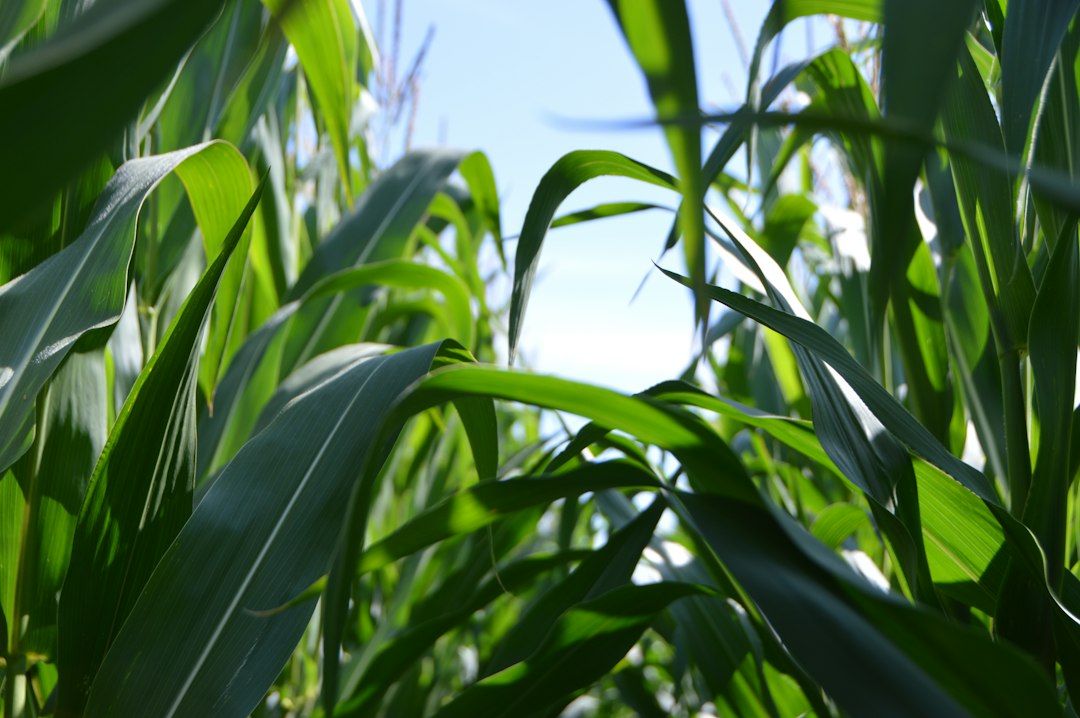
Image: Sorghum field. Photo by Henry Perks / Unsplash.