If you have searched “What is World Space Week?” this week, you are not alone. Google Trends is showing active interest in the question in India as World Space Week 2026 runs from October 4 to 10. But this is more than a seven-day celebration of rockets, astronauts and planets. It is a reminder that space science is connected to everyday life—and that today’s curious students could become tomorrow’s scientists, engineers and explorers.
World Space Week is celebrated every year from October 4 to October 10. The United Nations declared the annual observance in 1999 to highlight the benefits of space science and technology and to inspire young people to take an interest in fields such as astronomy, space exploration and human spaceflight.
Why October 4 and October 10?
The dates were chosen because they mark two important milestones in the history of space.
- October 4, 1957: The Soviet Union launched Sputnik 1, the first artificial satellite to orbit Earth.
- October 10, 1967: The Outer Space Treaty entered into force, establishing important principles for the peaceful exploration and use of outer space.
So World Space Week connects two sides of the space story: the beginning of the Space Age and the development of international rules for activities beyond Earth.
What is the theme of World Space Week 2026?
The 2026 World Space Week theme is “Rocket Revolution.” The theme puts attention on the rapid development of launch technology and the changing way humanity reaches space.
That matters to students because rockets are no longer simply symbols of the early Space Age. Modern launch systems are part of a much larger space economy involving satellites, communications, navigation, Earth observation, scientific research and commercial spaceflight.
Why does space matter if we live on Earth?
This is one of the most useful questions a student can ask. You do not need to become an astronaut for space technology to affect your life.
- Navigation: Satellite-based positioning helps phones, vehicles and many other systems determine location.
- Communication: Satellites support communications over huge distances and help connect remote areas.
- Weather: Earth-observing satellites help scientists monitor weather systems and environmental conditions.
- Agriculture: Satellite observations can help monitor crops, land and water resources.
- Disaster response: Images and data from space can help authorities understand floods, fires, storms and other events.
- Science: Space missions allow researchers to study planets, stars, galaxies and the conditions that shape our universe.
Does World Space Week matter for Indian students?
Yes. India has built a major space programme, and the country’s growing interest in space science creates opportunities across engineering, physics, computer science, mathematics, medicine, materials science, robotics and data analysis.
For a student, “space career” does not automatically mean “astronaut”. A space mission needs people who design spacecraft, write software, analyse data, build instruments, study materials, operate communication systems, manage projects and explain complex science to the public.
What can students do during World Space Week?
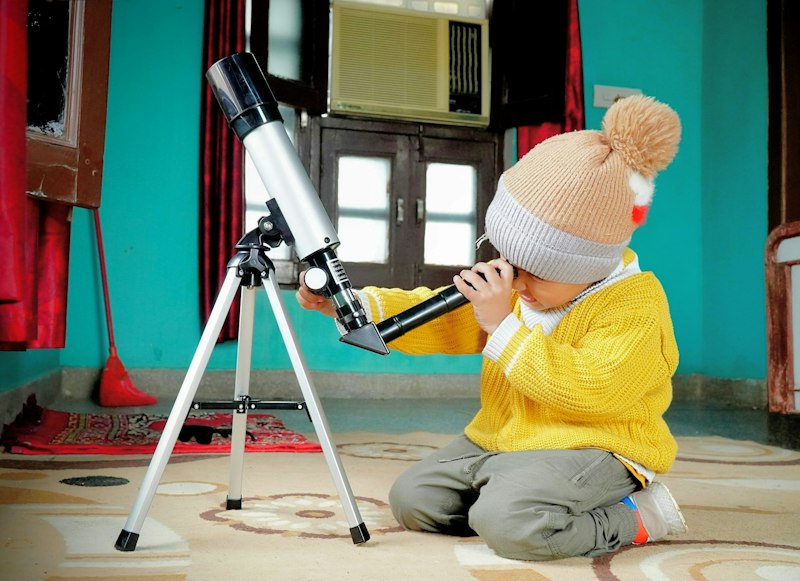
You do not need an expensive telescope or a laboratory to start.
- Learn to identify the Moon, planets and major constellations.
- Follow an actual space mission and ask why each instrument or experiment is being used.
- Build a simple model rocket or spacecraft and learn the science behind it.
- Use publicly available satellite imagery to explore Earth.
- Visit a planetarium, science centre or astronomy club.
- Keep a notebook of questions about space and research the answers using reliable scientific sources.
Three space questions every curious student should ask
- How do we know what is happening so far away? Scientists use light, signals, telescopes, spacecraft and mathematical models to gather evidence.
- Why do rockets need so much energy? A rocket must accelerate enough to overcome Earth’s gravity and reach the required trajectory or orbit.
- Could humans live beyond Earth? Scientists are studying the Moon, Mars and other environments, but long-term human life away from Earth remains a difficult engineering, medical and scientific challenge.
The bigger lesson behind World Space Week
The most important part of World Space Week may not be memorising the names of planets or famous astronauts. It is learning how to turn curiosity into investigation.
When a student asks “What is that?”, the next step should be “How do we know?” That shift—from curiosity to evidence—is at the heart of science.
And that is why World Space Week remains relevant even for students who never plan to work in the space industry. It encourages a habit that is useful in almost every field: ask better questions, test ideas, check evidence and keep exploring.
Quick answers
- When is World Space Week? October 4–10 every year.
- Why is it celebrated? To highlight the benefits of space science and technology and inspire interest in space-related fields.
- Why October 4? Sputnik 1 was launched on October 4, 1957.
- Why October 10? The Outer Space Treaty entered into force on October 10, 1967.
- What is the 2026 theme? “Rocket Revolution.”
Sources: United Nations Office for Outer Space Affairs (UNOOSA); World Space Week Association; Google Trends and Google India’s Year in Search reporting.