A United Launch Alliance (ULA) Vulcan rocket failed to place its payload into orbit about 10 minutes after lifting off from Florida on November 15, destroying the mission’s 40 Amazon Leo broadband satellites. ULA has not identified the cause. The failure is a setback for Amazon’s plan to build a satellite-internet network to compete with SpaceX’s Starlink, and it raises questions about when Vulcan can return to flight.
The mission, called Vulcan Leo 1, was the first of 38 Vulcan launches contracted by Amazon. It was also the first time the rocket had flown in nine months. Reuters reported that this was the first total mission failure in ULA’s 20-year history.
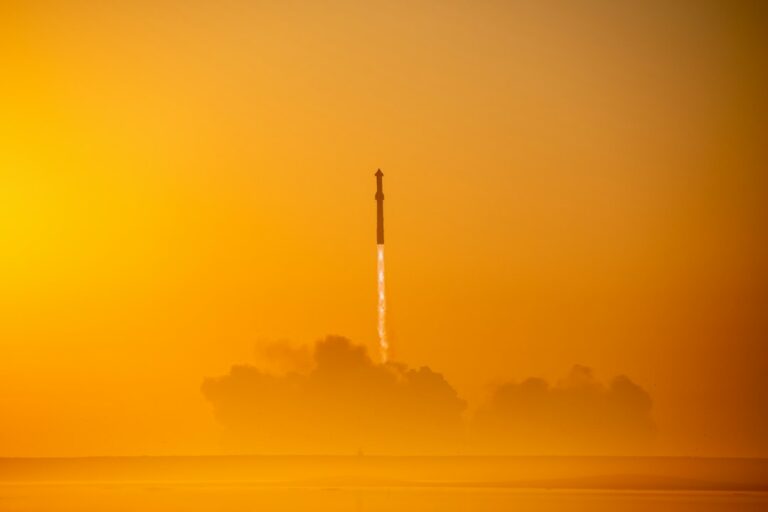
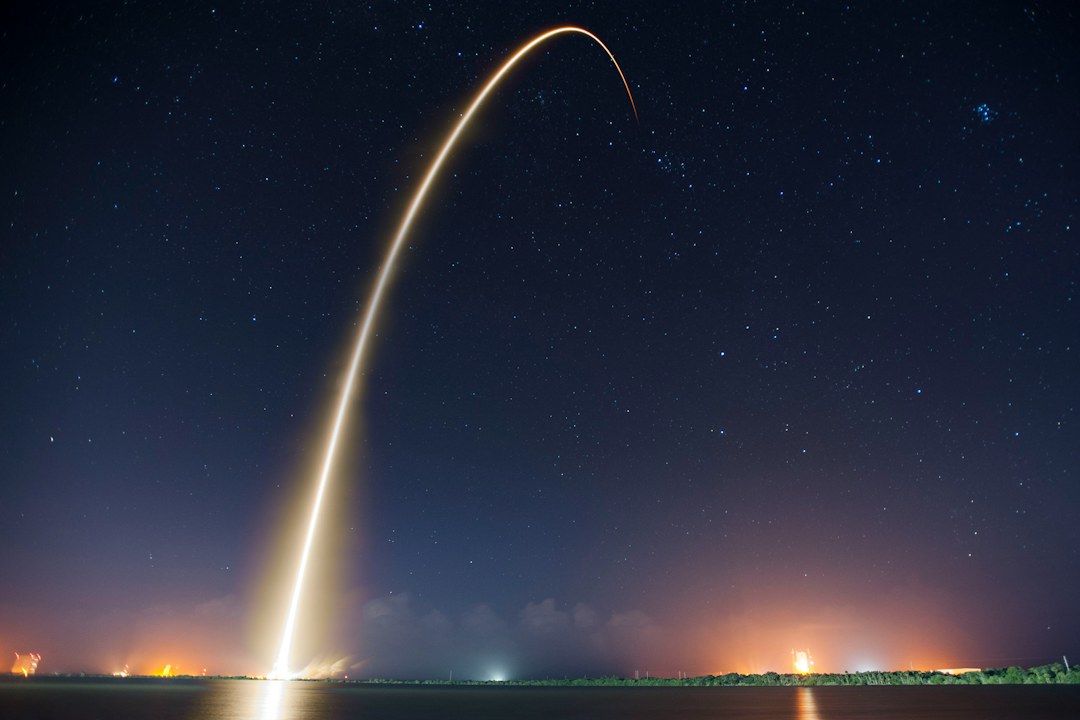
Representative image: rocket launch photograph by SpaceX via Unsplash. This is an illustrative launch image, not a photograph of the failed Vulcan Leo 1 mission.
What happened to the ULA Vulcan rocket?
The Vulcan lifted off from Space Launch Complex 41 at Cape Canaveral Space Force Station in Florida on November 15. ULA said data received by its launch director showed that the vehicle suffered an anomaly roughly 10 minutes into the flight and failed to deliver the Amazon mission to orbit.
ULA said it did not yet have enough flight data to understand what happened. The company said it would work with Amazon and other relevant organisations to establish the cause, determine corrective action and return the rocket to flight. Amazon described ULA as a trusted partner and said it expected the company to learn from the mission.
The cause has not been publicly established. The failure should not be attributed to a particular engine, booster or flight stage without the results of the technical investigation.
Why is this failure significant for ULA?
ULA is a joint venture between Boeing and Lockheed Martin. Vulcan is its newer heavy-lift launch vehicle, developed to succeed the company’s Atlas V and Delta rocket families. The November 15 mission was Vulcan’s fifth flight since its debut in 2024 and its first in nine months.
The long gap before the flight followed separate technical reviews involving Vulcan’s solid rocket boosters and its BE-4 engines. Those earlier issues are part of the programme’s history, but ULA has not said that they caused the November 15 failure. Reuters reported that the latest anomaly appeared to occur after the second stage separated, while stressing that the cause remained unknown.
A technical investigation could keep Vulcan grounded while ULA and its partners examine the flight data and decide what corrective work is necessary. Reuters reported that the failure could lead to a lengthy investigation and keep the rocket off the launch market for months. ULA has not announced a return-to-flight date.
What does the loss mean for Amazon Leo?
Amazon Leo, previously known as Project Kuiper, is the company’s low-Earth-orbit satellite broadband network. The planned constellation is intended to deliver internet connectivity to homes, businesses and communities beyond the reach of conventional networks.
Before the failed mission, Amazon had deployed 398 satellites across 14 launches, according to Reuters. The company says it needs 3,236 satellites for its planned global service coverage. The 40 satellites lost in the Vulcan flight would have represented roughly one-tenth of the spacecraft already in orbit at that point, although only about 1.2 per cent of the planned 3,236-satellite constellation.
The mission was intended to carry Amazon’s largest single batch of Leo satellites to orbit so far. Amazon had said Vulcan would deliver more than 1,500 first-generation Leo satellites across 38 contracted missions, making it a major part of the deployment plan. Losing the first batch therefore affects more than the 40 spacecraft: it also puts the reliability and schedule of the Vulcan launch partnership under scrutiny.
Does Amazon have other rockets to launch its satellites?
Yes. Amazon’s launch programme is not dependent on Vulcan alone. The company has also contracted launches with Arianespace, Blue Origin and SpaceX. Its own November 15 update listed an Ariane 6 mission, Leo Europe 4, as targeting no earlier than November 23 from Europe’s Spaceport in French Guiana. That was a target date published by Amazon, not a guarantee that the launch would proceed as scheduled.
Using several launch providers gives Amazon alternatives while ULA investigates the failure. It does not remove the impact of losing a 40-satellite batch or the importance of the 38 Vulcan missions in the wider deployment plan.
What does this mean for the Starlink competition?
SpaceX’s Starlink network has a substantial head start, with more than 11,000 satellites and millions of customers, Reuters reported. Amazon is still building the constellation needed for its own service. A reliable launch cadence is central to closing that gap, particularly because Amazon uses external launch providers rather than relying on a single in-house rocket fleet.
The Vulcan failure does not end Amazon Leo’s plans, but it adds a technical and scheduling challenge to a programme that needs many more satellites in orbit. The scale of the delay will depend on the investigation, ULA’s corrective work and how quickly Amazon can use its other contracted launch providers.
GAWAH has also reported on SpaceX’s Starship Flight 15 test and the return of its upper stage, another recent development in the increasingly competitive commercial launch sector.
Frequently asked questions
Did the Vulcan rocket explode?
ULA confirmed an in-flight anomaly about 10 minutes after liftoff and said the rocket failed to deliver the Amazon mission to orbit. The company has not publicly established the precise failure mechanism.
How many Amazon Leo satellites were lost?
The failed Vulcan Leo 1 mission was carrying 40 Amazon Leo broadband satellites. They were not delivered to orbit.
What is Amazon Leo?
Amazon Leo is Amazon’s low-Earth-orbit satellite internet network, previously known as Project Kuiper. It is being developed to provide broadband connectivity and compete with services such as SpaceX’s Starlink.
Has ULA identified the cause of the failure?
No. ULA said it did not have enough data immediately after the anomaly to identify the cause. A technical investigation is under way, and no return-to-flight date has been announced.
Will Amazon Leo’s satellite launches stop?
Not all launches depend on Vulcan. Amazon has contracts with several launch providers, including Arianespace, Blue Origin and SpaceX. The failure affects the Vulcan programme, while the timing of subsequent missions may change as investigations proceed.
Sources and mission updates
Reuters: Vulcan rocket fails and 40 Amazon satellites are lost | Amazon: 40 satellites on the first Vulcan mission | Amazon Leo mission updates, including the planned Ariane 6 launch | Space.com: Technical background on the Vulcan flight | Spaceflight Now: ULA’s first total mission failure
GAWAH News Desk | November 17, 2026