NASA’s Voyager 1 spacecraft has reached a distance of one light-day from Earth, a milestone that means a radio signal travelling at the speed of light now needs about 24 hours to cover the distance between the probe and our planet.
The spacecraft crossed the threshold at 2:16 a.m. Pacific Standard Time on November 18, 2026, NASA said in a release dated November 19. One light-day is the distance light travels in 24 hours, approximately 25.9 billion kilometres or 16.1 billion miles.
What does one light-day mean?
Light travels through space at about 299,000 kilometres per second. Even at that extraordinary speed, it now takes roughly a full day for a signal from Voyager 1 to reach Earth. A command sent from Earth also takes about a day to reach the spacecraft. A round trip for a message and response can therefore take close to two days.
NASA’s Jet Propulsion Laboratory received the signal confirming the milestone about 24 hours after it left the spacecraft. The delay is a practical reminder of how far Voyager 1 has travelled and the patience required to operate a mission at the edge of the solar system.
A journey that began in 1977
Voyager 1 launched in 1977, alongside its twin Voyager 2, to study the outer planets. Its observations of Jupiter and Saturn transformed scientists’ understanding of those worlds and their moons. In 2012, Voyager 1 became the first human-made spacecraft to enter interstellar space, beyond the heliosphere created by the Sun.
The probe continues to travel at about 61,155 kilometres per hour. NASA describes Voyager 1 and Voyager 2 as humanity’s only spacecraft operating in interstellar space. Both continue to provide measurements that help researchers understand the region beyond the Sun’s immediate influence.
The spacecraft is still facing technical challenges
The light-day milestone comes as engineers work through an issue affecting Voyager 1’s science and engineering data. NASA said it had not received that data from the spacecraft since November 14, although the probe was still sending a carrier signal. Engineers used that signal and trajectory calculations to confirm the distance milestone.
The mission has survived decades of ageing hardware and shrinking power supplies. Engineers have repeatedly adapted operating procedures and switched off equipment to conserve energy. NASA says the spacecraft’s continued journey is the result of careful engineering and the work of generations of mission teams.
Voyager 1 also carries the Golden Record, a message containing sounds and images from Earth. It is a symbolic addition to a mission whose scientific value continues long after its original planetary encounters.
Source: NASA: Voyager 1 Makes History Reaching One Light-Day From Earth, November 19, 2026.
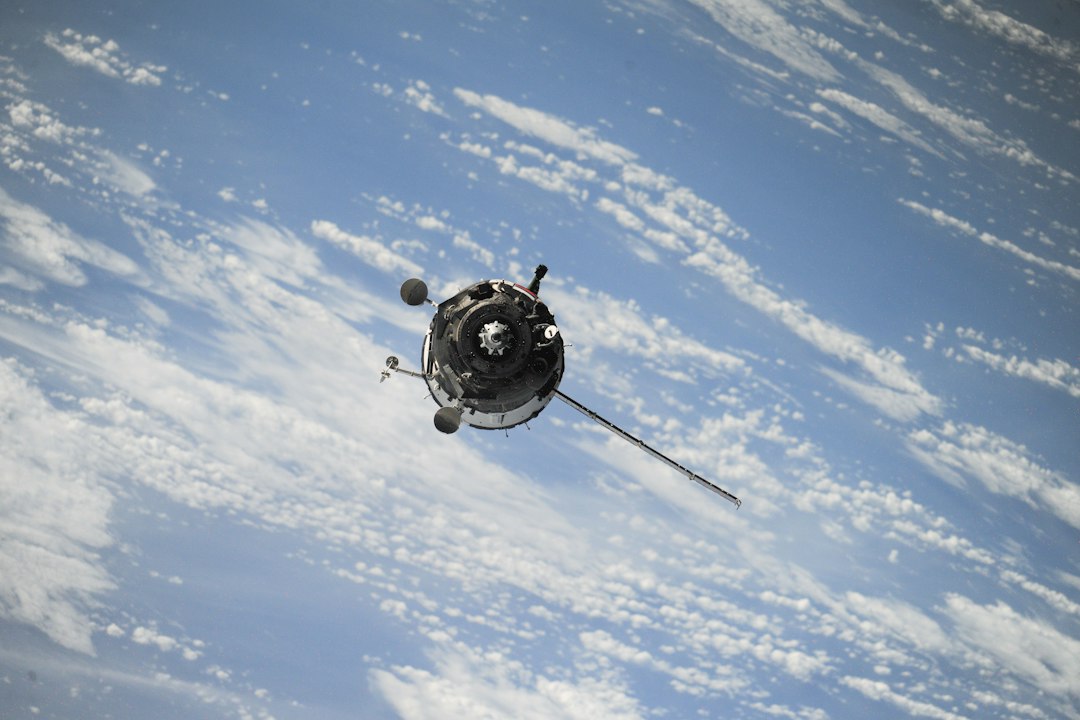
Featured image: Representative image of a spacecraft in orbit, not a photograph of Voyager 1. Photo by NASA via Unsplash.