Quick answer: Bharat Future City is Telangana’s proposed new urban and economic growth centre in the southern Hyderabad region. The key verified figure is 765.28 square kilometres, the area notified by the Telangana government for the Future City Development Authority (FCDA) in March 2025. This is the wider planning jurisdiction, not the footprint of the core city alone.
There has been confusion over the size of the project, with some reports later citing around 867 sq km. The original government notification, the Hyderabad Metropolitan Development Authority’s official website and a November 2026 account of the FCDA’s submission before the National Green Tribunal all cite 765.28 sq km. We could not verify a revised government notification establishing 867 sq km as the new notified area. This explainer therefore uses the officially documented 765.28 sq km figure and explains the distinction.
1. What exactly is Bharat Future City?
Bharat Future City is the Telangana government’s proposed greenfield urban and economic development project on the southern side of Hyderabad. It is intended to bring together technology, artificial intelligence, life sciences, healthcare, education, advanced manufacturing, sports and other sectors in a planned urban region.
The Future City Development Authority, or FCDA, is the special planning authority created to coordinate development in the designated Future City Area. It was constituted through Government Order Ms. No. 69, dated 12 March 2025, under the Telangana Urban Areas (Development) Act, 1975.
2. How big is Future City? The 765.28 sq km figure explained
The government’s March 2025 notification describes the Future City Area as covering 765.28 sq km in Rangareddy district. The original notification included 56 revenue villages across seven mandals.
To understand the scale, 765.28 sq km is approximately 1.89 lakh acres. It is the wider FCDA planning jurisdiction, which includes existing villages, rural areas, industrial and infrastructure corridors and land that may be subject to different planning and conservation requirements. It does not mean that every acre will become a built-up urban city.
3. Why are there reports of 867 sq km and 71 villages?
A report published by The New Indian Express on 27 August 2026 described the FCDA jurisdiction as around 867 sq km and 71 revenue villages. Other reports have referred to 15 additional villages being brought into the authority’s area.
However, the area figure is not consistent across the available records. The official HMDA website continues to identify the FCDA area as 765.28 sq km. More importantly, a report on the FCDA’s counter-affidavit before the National Green Tribunal in November 2026 says the authority itself described its jurisdiction as 56 revenue villages across 765.28 sq km.
It is therefore important not to present 867 sq km as an officially confirmed revised area without a subsequent government order or gazette notification. The village count and the legal boundary should be checked against the latest formal notification. For now, 765.28 sq km is the verified notified figure.
4. Is the entire 765 sq km the city being built?
No. This is one of the most important distinctions. Government planning documents describe Bharat Future City’s core development footprint as approximately 30,000 acres. The much larger 765.28 sq km refers to the FCDA’s wider planning area.
The wider jurisdiction is expected to be planned in a coordinated way, with different land uses and zones. It includes settlements and areas where environmental protection, transport planning, existing land rights and infrastructure will all need to be considered.
5. Where is Bharat Future City located?
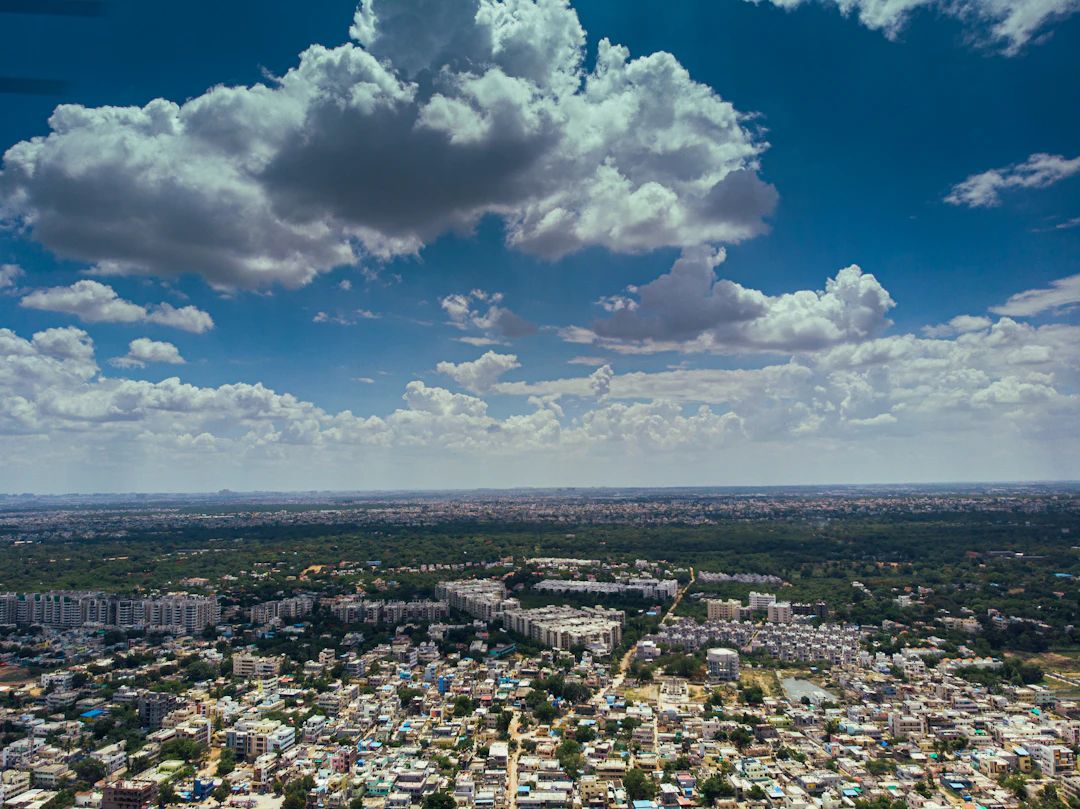
The project lies beyond Hyderabad’s Outer Ring Road in the southern growth corridor of Rangareddy district, around the Meerkhanpet region and the corridors connecting the Srisailam and Nagarjunasagar highways. Its location is intended to benefit from access to Rajiv Gandhi International Airport and planned road and public transport connections.
The FCDA’s original area covered parts of seven mandals: Amangal, Ibrahimpatnam, Kandukur, Kadthal, Maheshwaram, Manchal and Yacharam.
6. What will come up in Future City?
The government’s development vision identifies a number of proposed economic and civic clusters, including:
- AI and technology: artificial intelligence, data centres, research and technology businesses.
- Life sciences and pharmaceuticals: research, healthcare innovation and advanced manufacturing.
- Education: universities, skill development and research institutions.
- Healthcare: hospitals, medical research and health-related services.
- Industry: electronics, electric vehicles, energy and advanced manufacturing.
- Sports and recreation: sports infrastructure, entertainment and green public spaces.
These are elements of the development vision. They should not be mistaken for facilities that are all already built or operational.
7. What does net-zero city mean?
The government describes Bharat Future City as a net-zero greenfield city. Net zero means reducing greenhouse gas emissions as far as possible and balancing the remaining emissions through credible removals or other measures.
Achieving that ambition would require energy-efficient buildings, renewable energy, cleaner transport, water conservation, waste management, wastewater reuse and protection of natural areas. The real test will be measurable performance as the project develops, rather than the use of the term in promotional material.
8. Has construction and development begun?
The FCDA has been established and its headquarters at Meerkhanpet was inaugurated in June 2026. The government has also initiated the preparation of a Vision and Comprehensive Master Plan 2047 with planning consultants.
But the proposed city should not be described as complete or fully operational. In a counter-affidavit reported in November 2026, the FCDA told the National Green Tribunal that it had not approved or undertaken the townships, infrastructure or development projects alleged in the petition. The status of individual projects, clearances and land approvals must be checked separately.
9. What could it mean for Hyderabad and Telangana?
If implemented with sound planning, Future City could create new employment opportunities, attract investment and distribute economic activity beyond Hyderabad’s established IT and business districts. It could also improve connectivity and support industries that need large, purpose-planned campuses.
Its success will depend on more than investment announcements. Water security, transport links, affordable housing, environmental safeguards, fair treatment of farmers and existing communities, and reliable public services will determine whether it becomes a liveable city.
Frequently asked questions
What is the officially notified area of Bharat Future City?
The Telangana government’s March 2025 notification specifies 765.28 sq km for the Future City Area under the FCDA.
Is Future City 867 sq km?
Some reporting in August 2026 cited around 867 sq km and 71 villages. However, we could not verify a revised government notification confirming that area. Official HMDA information and the FCDA position reported before the NGT cite 765.28 sq km.
How many acres is 765.28 sq km?
It is approximately 1.89 lakh acres. This is the wider planning jurisdiction, not the core city construction footprint.
How large is the core Bharat Future City project?
Government planning material describes the core development footprint as approximately 30,000 acres.
Which authority is responsible for Future City?
The Future City Development Authority (FCDA), constituted by the Telangana government in March 2025, is responsible for planning and coordinating development in the notified area.
Sources and official documents
- Government of Telangana: G.O. Ms. No. 69, 12 March 2025, constituting FCDA and notifying 765.28 sq km across 56 villages.
- Hyderabad Metropolitan Development Authority: About HMDA, confirming the notified FCDA extent.
- Telangana Rising 2047 government document, describing the Future City vision and core development footprint.
- The New Indian Express, 27 August 2026, reporting the 867 sq km and 71-village figure.
- The Times of India, 5 November 2026, reporting the FCDA’s counter-affidavit before the NGT.
Bottom line: Bharat Future City is a long-term urban and economic development vision. The best-supported official area figure is 765.28 sq km for the FCDA’s notified planning jurisdiction. The 30,000-acre core city is a separate, smaller development footprint. Claims of a revised 867 sq km boundary need a formal updated notification before being treated as settled fact.