For a week in November, Hyderabad once again turned its attention to the stage. The 21st Qadir Ali Baig Theatre Festival brought together actors, directors and theatre practitioners from different parts of the country, offering audiences a programme that moved between contemporary theatre, established classics, cinema and learning.
Curated by Mohammad Ali Baig in memory of his father, the late theatre personality Qadir Ali Baig, the festival has grown over two decades into a distinctive fixture on Hyderabad’s cultural calendar. What began as an effort to preserve and extend a theatrical legacy has gradually become a meeting ground for established performers and audiences discovering theatre for the first time.
The five live productions offered considerable variety. Rakesh Bedi opened the theatrical programme with Vijay Tendulkar’s Massage, directed by Harbansh Singh. Raghubir Yadav and Roshini Achreja followed with Piano, Yadav’s adaptation and direction of Ferenc Karinthy’s Steinway Grand.
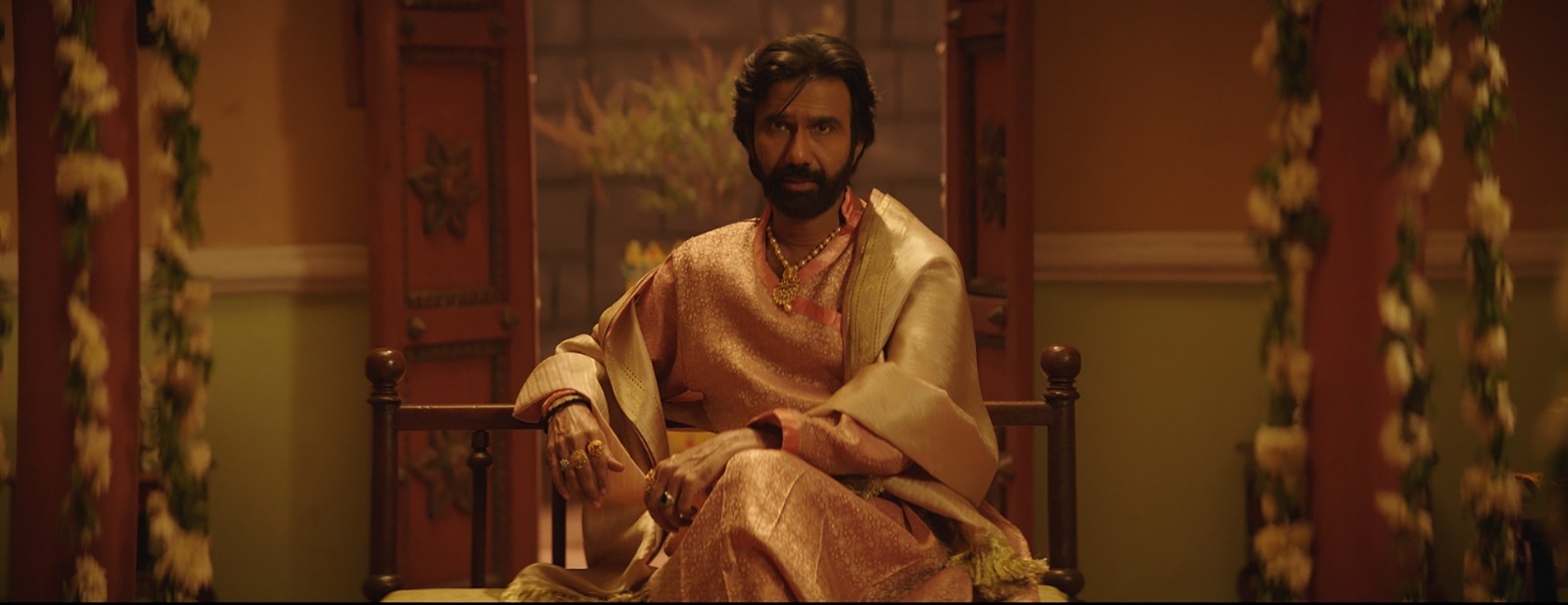
The programme then turned to the Mahabharata with Shakuni: The Question Remains, written and directed by Daulat Vaid and featuring Shrivardhan Trivedi. Telugu theatre found its place through Eruka, featuring Kotla Hanumantha Rao and Kotla Sannidhi, while Manu Rishi Chadha’s Window Tak Ashiqui, written and performed by him, brought the theatrical programme to a close.
Cinema formed another strand of the festival. The screening of Chand Tara, the Qadir Ali Baig Theatre Foundation’s production, was followed by Jabbar Patel’s acclaimed Marathi film Jait Re Jait, associated with the legacy of Smita Patil, and Goutam Ghose’s Yatra, featuring Nana Patekar, Rekha and Deepti Naval.
The accompanying masterclasses and workshops added an educational dimension. Raghubir Yadav’s engagement with performance across stage and screen and Jabbar Patel’s session on the transition from theatre to cinema offered practitioners and aspiring performers an opportunity to learn from experienced filmmakers and actors. Workshops on children’s theatre, led by Ranjana Srivastava, and stage lighting, led by Daulat Vaid with Raghav Prakash Mishra and Divyang Shrivastava, widened the festival’s engagement beyond the evening performances.
There is also a distinctly Hyderabadi character to the festival. The association of performances with the city’s historic venues and the traditional chowki dinners at the Baig family haveli brings together theatre, hospitality and heritage in a manner that is difficult to replicate elsewhere.
The festival’s larger achievement, however, lies in sustaining an audience for live performance at a time when entertainment is increasingly consumed through personal screens. Mohammad Ali Baig has spoken of the importance of introducing younger audiences to theatre and giving them performances that entertain while also stimulating them intellectually. At the concluding performance of Window Tak Ashiqui, senior bureaucrat A.K. Khan praised Baig and his work, saying that his theatre had taken Hyderabad’s theatre to global heights.
Twenty-one editions represent more than longevity. They point to the effort required to keep an art form visible, accessible and relevant. For Hyderabad, the Qadir Ali Baig Theatre Festival is not simply an annual gathering of celebrated names. It is a continuing reminder that the city’s cultural life needs a living stage, and that the experience of watching a performance unfold in front of an audience remains irreplaceable.