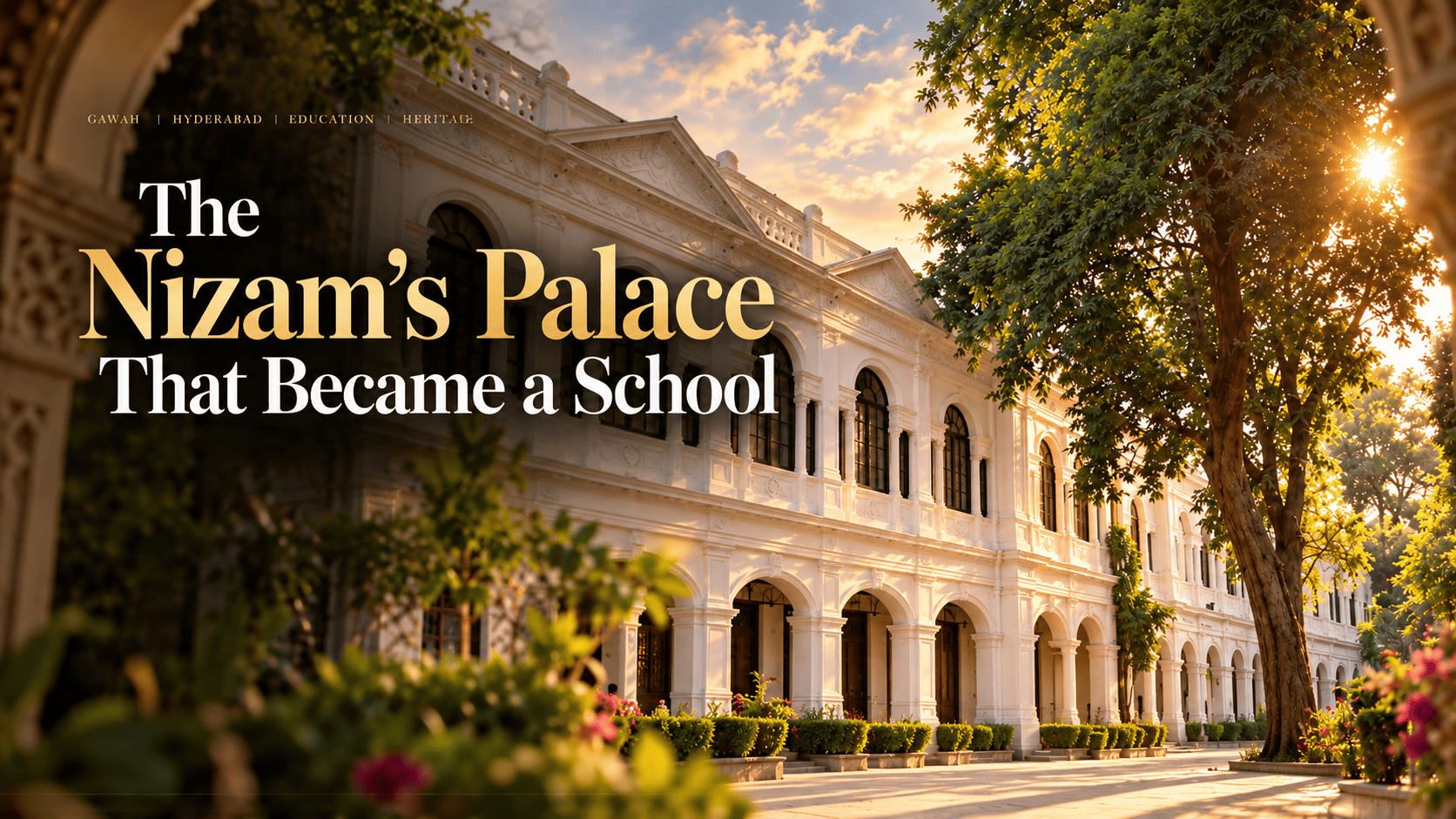
In Hyderabad, where traces of the Asaf Jahi era remain woven into the city’s streets and buildings, Purani Haveli occupies an unusual place. It is remembered as the palace of the Sixth Nizam, Nawab Mir Mahboob Ali Khan, and visited for its architecture and museum collections. It is also a school.
Children arrive each morning with schoolbags and books. Lessons take place within a complex whose rooms and courtyards once belonged to a very different world. The building has acquired a new life without losing its connection to the old one.
And the school inside it has built a record of achievement that would be notable anywhere.
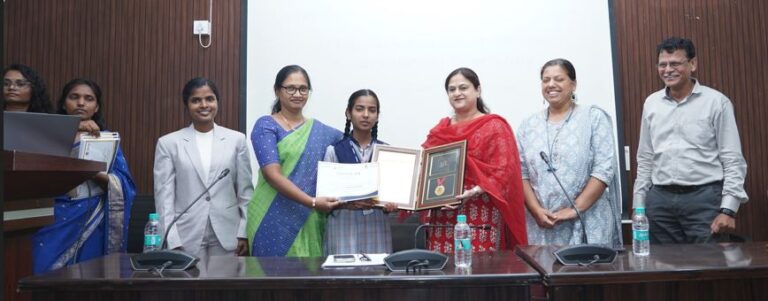
Its students have competed at regional, state and national levels in academics, oratory and sport. They have won medals and distinctions in competitions ranging from public speaking to football, cricket and boxing.
During the school’s 39th Founder’s Day celebrations, one girl stood before the audience and delivered a powerful account of the institution’s achievements. Her voice carried through the long hall as she moved from one accomplishment to the next. When she finished, the hall broke into thunderous applause.
It was one of the evening’s memorable moments.
The Mukarram Jah Trust for Education and Learning is now preparing to begin restoration of the Sixth Palace, or Mahal, within the Purani Haveli complex. The announcement came alongside the completion of restoration work on the historic Asaf Jahi wing, apart from minor finishing work.
The wing extends for nearly 1,000 feet and forms one of the most striking architectural elements of the campus. The Sixth Mahal is expected to be restored next, with work scheduled to begin soon and completion planned for next year. The additional space will allow the school to increase its student intake.
The restoration, in other words, has a practical destination: classrooms and students.
From royal residence to school campus
Purani Haveli was the official residence of Nawab Mir Mahboob Ali Khan, the Sixth Nizam of Hyderabad. Its architecture reflected the scale of a royal household at a time when Hyderabad was one of the most important princely states in India.
Among the complex’s best-known features is the enormous wooden wardrobe associated with the Sixth Nizam, housed in the Nizam Museum and widely described as the world’s longest wooden wardrobe.
For visitors, such objects offer a glimpse of Hyderabad’s royal past. For students of Mukarram Jah School, the relationship with the palace is more immediate. They study within it.
The transformation is closely associated with Mukarram Jah Bahadur, who succeeded his grandfather Mir Osman Ali Khan as the titular Nizam in 1967. His philanthropic interests included education, and the palace complex came to be used in connection with educational trusts.
The school that developed within the complex inherited an extraordinary setting. Its students, over time, have given that setting a very different kind of distinction.
The ambition inside the old walls
For three consecutive years, Mukarram Jah School has been ranked No. 1 in India in the school rankings cited by the institution. This year, it was ranked second nationally.
Its students have also distinguished themselves outside the classroom. A student has won a gold medal in boxing, while others have achieved recognition in football, cricket and other sporting competitions. Students regularly compete at regional, state and national levels, often against some of the strongest young talent in the country.
Oratory is another strength.
The Founder’s Day speech that drew sustained applause demonstrated the confidence expected of students who are being prepared not merely to pass examinations, but to stand before an audience and hold its attention.
Perhaps this is what the palace should be for.
Its long corridors and expansive spaces are hard to ignore. For students growing up in such surroundings, there is an almost natural invitation to think beyond the immediate — to dream big, but also to develop the discipline required to achieve those ambitions.
The heritage brings its own expectation. A school operating in a palace associated with the Nizams cannot easily settle for mediocrity.
The results suggest that it does not.
Restoring a working school
Maintaining a modern school within a historic complex is not without its challenges. Contemporary educational institutions require infrastructure, safety measures and facilities that historic buildings were never designed to accommodate.
The restoration of the Asaf Jahi wing and the planned work on the Sixth Mahal therefore require a balance between preservation and practical use.
Nawab M.A. Faiz Khan, Trustee of the Mukarram Jah Trust for Education and Learning, put the philosophy simply during Founder’s Day:
“We are fortunate to have the palace of a historic ruler as our school campus. Let us make the best use of this legacy for education.”
The educational programme extends beyond rankings and medals. Faiz Khan spoke about holistic development and personalised attention, while emphasising the importance of higher education for women and encouraging female students to continue to university.
Guest of Honour Farhana Ahmed, founder of The Happy Project – Early Years, urged students to dream boldly, learn with joy and remain kind.
There was also a warning about a very modern temptation: using artificial intelligence as a shortcut. Students were encouraged to treat AI as a tool that complements human ingenuity and creativity rather than as a replacement for hard work.
The message fits an institution that appears to place considerable emphasis on performance while still looking beyond examination results.
The palace that became a school
The restoration of the Sixth Mahal will add another chapter to Purani Haveli’s unusual history. Once completed, the additional space is expected to allow the school to admit more students.
For those students, the palace may eventually become less a piece of history than a familiar part of childhood: the corridor they walked through between classes, the hall where they spoke, the grounds where they played and competed.
That may be the most interesting thing about the transformation. The palace was once built around the life of a ruler. Today, its spaces are occupied by young people preparing for university, professional life and competitions far beyond Hyderabad.
They are already competing nationally. They are winning medals. They are standing before audiences and speaking with confidence. Perhaps the grandeur of the setting is not incidental. A palace gives its students room to think big. The institution asks them to match that ambition with work, discipline and performance.
Next year, the school is slated to complete 40 years. And if the next phase of restoration succeeds, more students will have the opportunity to do exactly that. The old palace will have more classrooms. And, perhaps, more gems to come out of them.