Real wages for factory workers in India grew by just 0.7 per cent in 2024-25, despite a rise in corporate earnings, highlighting the gap between company performance and the purchasing power of workers.
Data from the latest Annual Survey of Industries shows that the average wage per factory worker increased by 5.3 per cent in nominal terms to about ₹2.28 lakh during 2024-25. Once inflation is taken into account, however, the increase works out to only 0.7 per cent.
The figure was the strongest real wage growth in three years, but the longer trend remains weak. Real wages rose by 0.1 per cent in 2023-24 and declined by 1.1 per cent in 2022-23. Across five of the last six years, annual real wage growth for factory workers remained below one per cent.
The gap between profits and pay
The figures have renewed attention on the distribution of gains from economic growth. Stronger corporate profits do not automatically translate into higher wages. Investment, productivity, input costs, demand and the bargaining position of workers all influence how companies allocate earnings.
For households, the distinction between nominal and real wage growth is crucial. A salary can rise on paper while the cost of food, housing, transport and other essentials absorbs most of the increase. That leaves workers with little improvement in what their income can actually buy.
The data cited here concerns factory workers covered by the Annual Survey of Industries. It should not be treated as a measure of wage growth for every worker or sector in India. Still, it raises an important question for policymakers and employers: how can economic expansion translate into stronger and more broadly shared improvements in living standards?
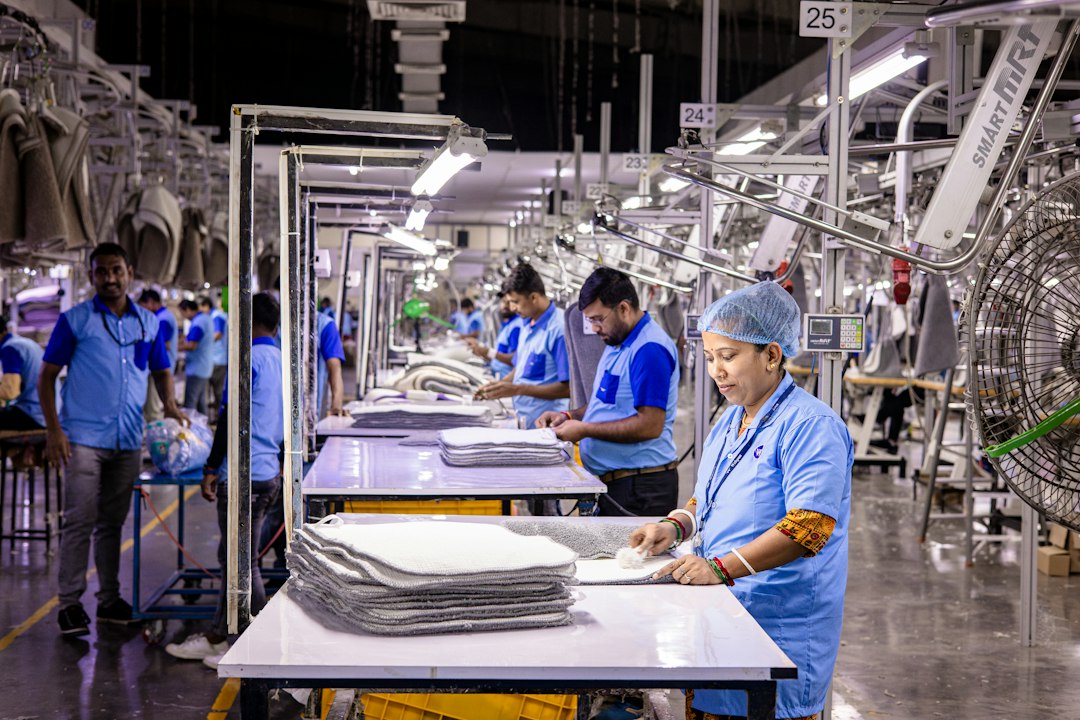
Image: Industrial production floor, illustrative photograph.
Source: The Indian Express.