Friday , March 6 2026
enhindiurdu

Compassion Must Remain Central to Medical Practice: Experts

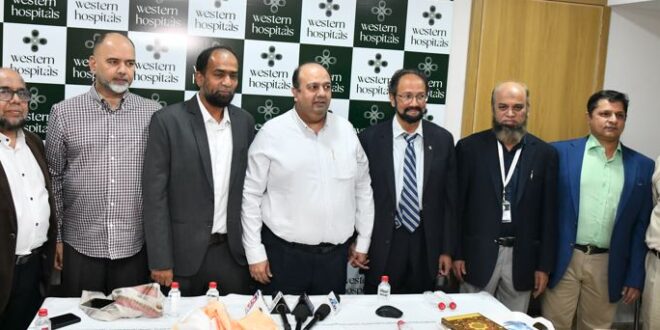
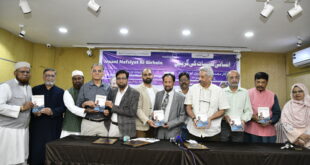
Hyderabad, January 31: Treating patients as customers would amount to a disservice to the noble profession of medicine, said noted Indian-American psychiatrist Dr Khutbuddin Mohammed on Tuesday.

Speaking after inaugurating the website of Western Hospitals, Dr Khutbuddin said that while medical science has advanced significantly and doctors today are equipped to treat a wide range of illnesses, compassion must remain at the heart of healthcare delivery.

Referring to the historical foundations of medicine, he noted that The Canon of Medicine by Avicenna served as a standard medical text in Europe for nearly 600 years. He also recalled that one of the earliest known anti-depression formulations was introduced in the early 19th century by Hakeem Ajmal Khan, highlighting the long tradition of holistic healing in medicine.

Dr Khutbuddin urged medical practitioners to prescribe only those medicines and diagnostic tests that are genuinely required, cautioning against unnecessary procedures driven by billing considerations. He emphasised the importance of building compassionate doctor–patient relationships, observing that while medicine can treat disease, compassion has the power to heal the mind and soul.

“Half of the treatment lies in the doctor’s ability to offer hope, happiness and a sense of reassurance,” he said, adding that the absence of these qualities often leaves patients feeling alienated. Doctors, he said, must serve with their mind, heart and soul.

He appreciated the management of Western Hospitals for prioritising compassion and care over consumerism in their healthcare approach.

Also speaking on the occasion, Amir Ali Khan, Editor of Siasat and former Member of the Legislative Council, called upon doctors to make compassion a core philosophy of medical practice.

Citing health indicators within the Muslim community, Mr. Khan said the average lifespan had declined by around five years among men and 6.5 years among women. He observed that compassion distinguishes humans from animals and congratulated the hospital management for establishing a care centre rooted in humane values.

He noted that patients often approach hospitals out of necessity and frequently incur expenses beyond their means, sometimes resorting to loans for medical treatment. Expressing hope, he said Western Hospitals would help break the stereotype of hospitals prioritising revenue over patient welfare.

Neuro Surgeon Dr. Mustafa Faisal welcomed the guest. Several medical professionals  including radiologist Dr Mateenuddin Saleem, Dr Junaid of Deccan Alumni Association of Middle East, and gastroenterologist Dr Syed Akbar Hassan were present at the even Director Dr Sarang.

About Gawah News Desk

Check Also

Services of Shadan Vizarath Rasool Khan honoured

Khaled Shahbaaz The services of Mrs. Shadan Vizarath Rasool Khan, Secretary of the Shadan Educational …

Experts Call for Global Push for Unani at 8th UDMA DayHamdard CEO Lauds City, Health Mela Showcases Innovations

Hyderabad, December 6: The 8th UDMA Day celebrations, accompanied by a Unani Health Mela that brought together manufacturers from across the country, were held in Hyderabad on Saturday, drawing leading figures from the Unani industry, research institutions and regulatory bodies. The event underscored the growing need to modernise the traditional system while strengthening research, safety frameworks and global outreach. Delivering the keynote address, Dr. Hamed Ahmed, President of the Unani Drugs Manufacturers Association (UDMA) and CEO of Hamdard Laboratories, called for a sharper strategic focus on scientific integration, regulatory clarity and international visibility for Unani medicine. Ahmed, who is also the grandson of Hamdard’s founder Hakeem Abdul Hameed, said the industry was at a critical juncture where traditional heritage must meet contemporary expectations. He referred to the significant representations made by UDMA over the past year, including the acceptance of the proposal allowing BUMS graduates to be considered for Food Inspector posts, which was later notified in the official Gazette. He also noted the detailed submission made to the Ministry of AYUSH on the latest GMP guidelines and the association’s meeting with the Central Council for Research in Unani Medicine (CCRUM) to explore clinical trials and long-term research collaborations. Several continuing medical education and regulatory sessions at the Centre of Excellence at Jamia Hamdard, he said, reflected the sector’s growing commitment to standards and transparency. Ahmed added that the exhibition held alongside the celebrations showcased new formulations, innovations and product launches, signalling the industry’s readiness to embrace modern demands.In his welcome address, Organising Chairman Hakeem Ghulam Mohiuddin, a senior Unani leader who played a pivotal role in forming the AP Unani Association and the GOP Unani Association, said Hyderabad was proud to host the UDMA Day, describing the city as the longstanding hub and epicentre of Unani medicine. He said that “between 600 and 700 Unani-registered companies operate in Hyderabad alone, making the city one of the most active centres for Unani manufacturing in the country”. Mohiuddin said the purpose of UDMA Day was not merely ceremonial but intended to give both local and non local manufacturers a platform to showcase their strengths, innovations and offerings. Drawing an analogy, he said the selective use of allopathic medicine by Unani practitioners should be akin to adding a little “achar or namak” to food, sparingly and only when absolutely necessary. He stressed that Unani medicine remains complete and self-sufficient when practised in its true classical and philosophical form. One of the strengths of the system, he added, was its transparency, as Unani physicians know not only the indication and approach to treatment but also the minutest ingredient used in each formulation. He urged practitioners and manufacturers to modernise outreach aggressively and remain confident competitors to corporate pharmaceutical giants.Padma Shri awardee and former CRIUM Director Dr. M. A. Waheed said there was immense potential for innovation, new drug development and targeted drug discovery within the Unani framework. He pointed out that immunomodulators, widely used today by people worldwide, were prescribed in Unani medicine thousands of years ago. Referring to the COVID-19 pandemic, he said “several Unani formulations played an important role as part of the AYUSH ministry’s national health response”. Dr. Waheed emphasised that, regardless of the drug or discipline, safety must remain paramount, especially long-term safety, and protocols must be strengthened accordingly. With focused and targeted research, he said, “the Indian Unani sector would be able to break traditional barriers and stand shoulder to shoulder with global pharmaceutical players.”Adding to the perspective, Zulfikhar Ali said Unani medicine is practised in nearly 85 countries, including Iran, India and other parts of the Middle East and South Asia, and that the foundational principles remain the same across these regions. He credited the survival and spread of the system to the sustained efforts of Unani drug manufacturers, who have kept the tradition alive through consistency and adherence to classical values. However, he pointed out that limited resources often restrict practitioners and researchers from competing with other medical systems, despite the fact that Unani continues to match, and in many cases surpass, other disciplines in research output and scholarly contributions.Dr Mohammed Khalid, Assitant Drug controller-cum-Licensing Authority for Government of NCT of Delhi said ”that in the 16th century, Unani hakeems serving in royal courts received annual rewards equivalent to over 200 kg of gold, nearly ₹80 crore today. At a time when much of the world was still adapting to basic hygiene and evolving lifestyles, Hyderabad was already far ahead, renowned for its medical excellence, drawing scholars from Europe and beyond who came solely to study its achievements.”Convener Dr. Nabeel Anwar, regional secretaries, UMA office bearers Dr Shakeeb, Dr. Rahman, and a large number of unani students, scholars and practitioners, were present on this occasion.

Leave a Reply