By Syed Khaled Shahbaaz
The date of October 9, 1591, is cited courtesy of historian and noted heritage activist Dr Mohammed Safiullah.
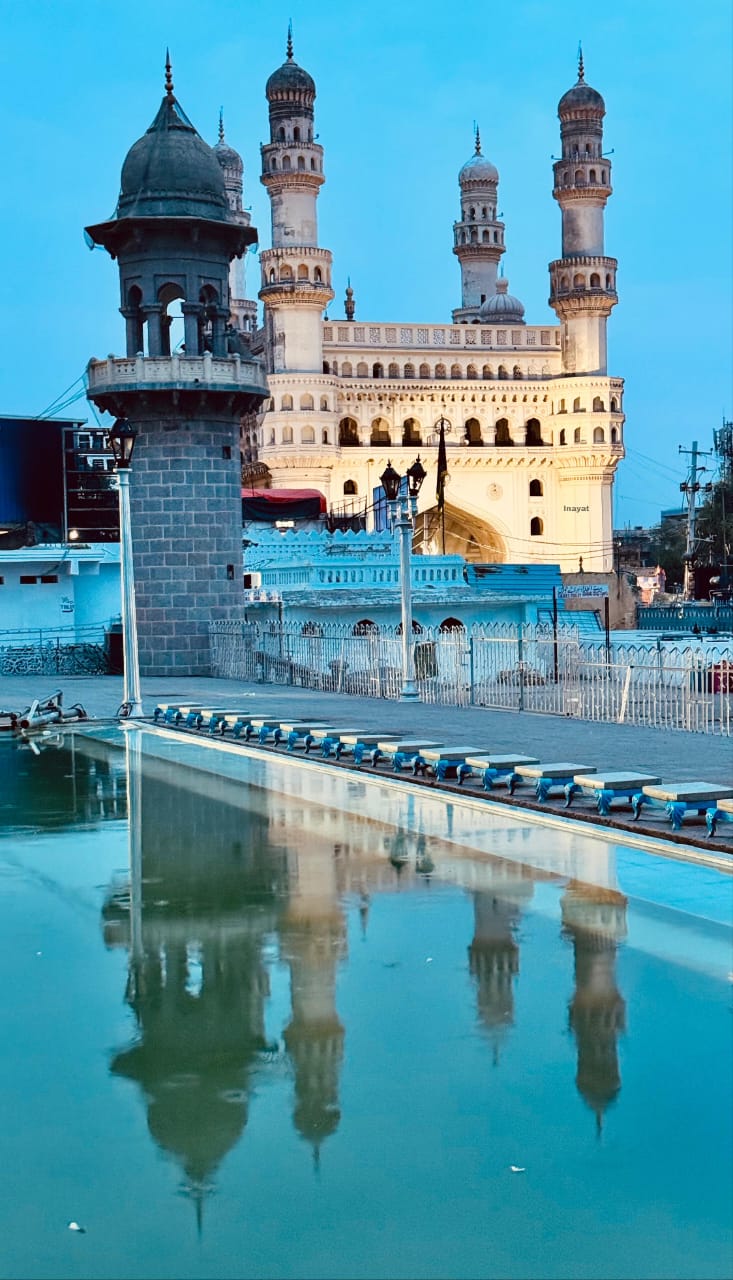
HYDERABAD: Charminar, the enduring symbol of Hyderabad’s history and architectural splendour, is associated with a remarkable historical milestone: the beginning of the Islamic Hijri year 1000.
October 9, 1591, is cited as the date associated with Charminar’s establishment, courtesy of historian and noted heritage activist Dr Mohammed Safiullah. The date is significant for its connection with the beginning of the second Islamic millennium, adding another dimension to the history of one of India’s most recognisable monuments.
A monument marking a millennium
Commissioned by Sultan Muhammad Quli Qutb Shah, the fifth ruler of the Qutb Shahi dynasty and founder of Hyderabad, Charminar has stood at the heart of the Old City for more than four centuries.
Its four imposing minarets and distinctive architectural design have come to symbolise Hyderabad’s cultural identity, while its surrounding streets continue to reflect the city’s vibrant traditions of commerce, craftsmanship and community life.
The monument’s association with the year 1000 AH offers a wider historical perspective on the origins of Hyderabad. The Hijri calendar is lunar, and its years are shorter than Gregorian solar years; the beginning of 1000 AH marked the transition into the second Islamic millennium.
Why October 9, 1591, matters
Historical descriptions generally place Charminar’s construction in 1591. The specific date of October 9 is associated with accounts and interpretations connecting the monument’s establishment with the beginning of 1000 AH, as highlighted by Dr Mohammed Safiullah.
Charminar’s origins are also discussed in connection with the founding of Hyderabad and, in some historical narratives, the end of a devastating plague. These accounts form part of the monument’s layered history and should be understood as historical interpretations rather than treated as interchangeable claims.
Four minarets, countless stories
Charminar occupies a central position in the historic city, with four grand arches opening towards major thoroughfares. The settlement that grew around it helped shape the urban pattern of Hyderabad, bringing together architecture, trade and everyday life.
More than four centuries later, the monument remains the visual signature of Hyderabad. Its streets continue to draw residents and visitors for their traditional food, craftsmanship, markets and cultural life.
A legacy beyond stone and mortar
The 435th anniversary is an opportunity to look beyond Charminar as a familiar landmark and revisit the historical narratives behind the making of Hyderabad. Its association with the Hijri year 1000 connects the city’s local history with a milestone of wider Islamic historical significance.
Charminar continues to stand as a reminder of Hyderabad’s layered heritage—a monument around which generations have gathered, traded, celebrated and built their lives.
Historical date courtesy: Historian and noted heritage activist Dr Mohammed Safiullah.
Photo credit: Inayat Farooqui