A United Nations review conference opens in Geneva on Monday, November 16, with governments facing a consequential decision on whether to begin formal negotiations on international rules for lethal autonomous weapon systems: weapons that can select and attack targets without direct human intervention. The five-day meeting, running until November 20, will consider the next steps for a possible international instrument, but it is not itself the signing of a new treaty.
The debate centres on how much human control must remain over decisions to use lethal force, whether certain autonomous weapons should be prohibited, and how international humanitarian law can be applied as military technology changes. The United States and Russia are expected to resist a push for binding rules, while the International Committee of the Red Cross (ICRC) is urging states to start negotiations on a legally binding protocol.
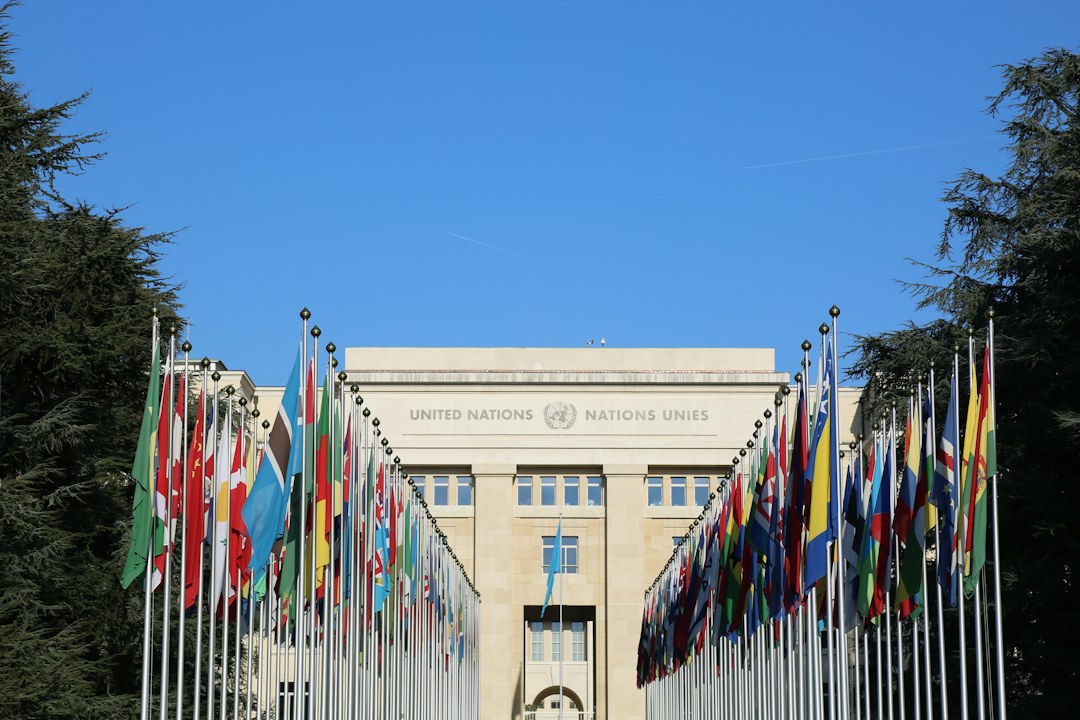
Representative image of international diplomacy; not a photograph of the conference. Photo: Salya T / Unsplash.
What is the UN conference deciding?
The Seventh Review Conference of the Convention on Certain Conventional Weapons (CCW) is being held at the Palais des Nations in Geneva from November 16 to 20. Review conferences take place every five years to assess the Convention and its protocols, consider new developments in warfare and set priorities for future work.
For autonomous weapons, the central task is to consider the work of the Group of Governmental Experts on emerging technologies in the area of lethal autonomous weapon systems and decide the mandate and modalities for the next phase. The UN Office at Geneva says the Group adopted a report on September 4, 2026, containing elements of a possible instrument without prejudging what legal form that instrument should take.
The Convention has 128 states parties. The conference will consider the next steps, but governments still have to agree on the scope, legal form and terms of any future instrument.
What are lethal autonomous weapon systems?
Lethal autonomous weapon systems, often shortened to LAWS, are weapons that can select and apply force to targets without a human making each individual targeting decision. The term covers a contested and evolving field. It should not be used as a blanket label for every drone, automated defence system or military tool that uses artificial intelligence.
Some military systems assist human operators with detection, tracking or recommendations. The regulatory debate becomes more acute when a system can select and engage a target after activation without further human intervention. Governments and experts disagree on definitions, the degree of autonomy that should trigger restrictions and what meaningful human control must involve.
Why are governments divided over binding rules?
Reuters reported on November 16 that the United States, Russia and Israel oppose the push for binding rules, arguing that existing international humanitarian law is sufficient. Washington favours guidelines and has proposed a five-year mandate for talks towards a non-binding agreement. Reuters also reported that Russia has not publicly stated its position for the conference, although it has previously resisted proposals for a legally binding agreement.
The chair of the talks has proposed a two-year mandate to negotiate a legally binding protocol. The United Kingdom, Germany and France support negotiations on an instrument while leaving open whether it should be legally binding. That leaves several possible outcomes, including a binding protocol, non-binding guidelines or a hybrid arrangement.
The disagreement is not simply about whether military technology should be regulated. It is also about whether current law is sufficiently specific, how restrictions would be verified and how responsibility would be assigned if an autonomous system makes a fatal error.
What does the Red Cross want governments to do?
The ICRC has called for states to launch negotiations on a new protocol with clear prohibitions and restrictions. In a statement published on November 13, ICRC President Mirjana Spoljaric said autonomous weapons should not proliferate without international rules and meaningful human control. The organisation argues that limits are needed to protect civilians and preserve accountability under international humanitarian law.
On August 25, UN Secretary-General António Guterres and the ICRC president renewed a joint appeal for new international rules. Their concern is that, as technology advances, the gap between what weapons can do and the rules governing their use could widen, making civilian protection and accountability harder to guarantee.
Why does human control matter?
International humanitarian law requires parties to armed conflict to distinguish between civilians and combatants, avoid indiscriminate attacks and take precautions to limit civilian harm. The autonomous-weapons debate asks how those obligations can be met when a machine is allowed to select and attack a target.
Concerns raised by humanitarian organisations include unpredictable system behaviour, errors in identifying people or objects, and difficulty establishing who is responsible for a harmful decision. Supporters of more flexible approaches argue that existing legal rules can apply to new technologies and that non-binding guidance may be more practical. The conference is intended to test whether states can agree on a common framework.
How can people follow the Geneva discussions from India?
The UN says meetings are scheduled from 10 am to 1 pm and 3 pm to 6 pm Geneva time during the conference, with proceedings available through UN Web TV. These slots correspond to 2.30 pm to 5.30 pm and 7.30 pm to 10.30 pm Indian Standard Time. The opening session is scheduled for 10 am in Geneva on November 16.
The main outcome to watch is whether states agree on a mandate for further negotiations, and whether that mandate leaves open a legally binding instrument or moves towards non-binding guidance. Any agreement on the process would be a step towards rules, not proof that a new treaty has already been adopted.
Frequently asked questions
When is the UN autonomous weapons conference?
The Seventh Review Conference of the Convention on Certain Conventional Weapons is taking place in Geneva from November 16 to 20, 2026.
Will the UN adopt a treaty on autonomous weapons on November 16?
No. The conference will consider the next steps and decide the mandate and modalities for future work. A new treaty has not been adopted simply because the review conference has opened.
Which countries oppose binding rules?
Reuters reported that the United States, Russia and Israel oppose the push for binding rules. The US has favoured non-binding guidelines. Reuters noted that Russia had not publicly stated its position for the November conference, while it had previously resisted binding proposals.
What does LAWS mean?
LAWS stands for lethal autonomous weapon systems. It refers to weapons capable of selecting and applying force to targets without a human making each individual targeting decision.
Official documents and reporting
UN Geneva: Seventh Review Conference, November 16–20 | UN Geneva: conference background and UN Web TV schedule | UN Group of Governmental Experts report, CCW/GGE.1/2026/3 | United Nations: Autonomous Weapon Systems FAQ | ICRC President’s statement, November 13 | ICRC recommendations for the review conference | Reuters report, November 16
GAWAH News Desk | November 16, 2026