SpaceX has achieved a major milestone in rocket recovery: its Starship spacecraft has returned from orbit and been caught by the mechanical arms of the launch tower in Texas. The feat, completed during Flight 15 on Saturday, November 14, is the first time a Starship upper stage has been recovered this way after an orbital mission.
The result brings Elon Musk’s company closer to its ambition of making the world’s largest rocket system rapidly reusable. But the mission was not a complete recovery success. The Super Heavy booster did not return to the launch site and was lost over the Gulf of Mexico.
What happened during Starship Flight 15?
The 407-foot Starship system lifted off from SpaceX’s Starbase facility in South Texas on Friday, November 13. The spacecraft separated from its Super Heavy booster, reached orbit and deployed 26 Starlink V3 satellites. It then completed approximately 14 orbits of Earth before beginning its return on Saturday.
During the final phase, Starship re-entered the atmosphere, performed its landing manoeuvre and approached the launch tower. Two large mechanical arms, nicknamed the chopsticks, caught the returning vehicle. The operation was a significant demonstration of the precision needed to recover a spacecraft directly at its launch site.
Why the booster was not caught
SpaceX had planned to recover both stages. The Super Heavy booster, however, experienced problems during its return and diverted towards the Gulf of Mexico, where it was destroyed over the water. The exact cause was still being assessed in the initial reports after the flight.
That distinction matters. Flight 15 demonstrated a successful orbital return and tower catch of the Starship upper stage, but it did not achieve full recovery of the two-stage launch system. SpaceX has previously caught Super Heavy boosters on earlier test flights, but this was the first attempt to bring the Starship upper stage back to the tower after an orbital mission.
Why catching Starship matters
Traditional rockets usually discard at least part of their launch system after flight. SpaceX wants Starship and Super Heavy to be recovered, inspected, refuelled and flown again with much shorter turnaround times. If the system can be reused reliably, the cost and logistics of launching large payloads could change substantially.
The tower catch is central to that plan. Rather than landing on a separate platform or ship, the spacecraft is guided back to the launch structure, where the mechanical arms capture it. The approach is technically demanding and leaves little room for error, particularly after the intense heating and forces of atmospheric re-entry.
What this means for NASA’s Moon plans
Starship is also part of NASA’s Artemis programme. The agency has selected a version of the spacecraft for the human lunar landing system, making reliable in-space operations, refuelling and repeatable flights important to future Moon missions. A successful recovery is encouraging progress, but it does not by itself demonstrate that Starship is ready to carry astronauts to the lunar surface.
Key challenges remain, including repeated flights, orbital propellant transfer, heat-shield durability and the recovery of both stages. SpaceX will need to demonstrate that the catch can be repeated safely and consistently before the system can be treated as operationally reusable.
A milestone, not the finish line
Flight 15 delivered one of the most striking demonstrations yet of SpaceX’s reusable-rocket ambitions. The Starship upper stage returned from orbit and was caught at the tower, while the booster failure showed how much engineering work remains.
The next test will be whether SpaceX can repeat the recovery, improve booster performance and move from dramatic test flights to a dependable launch system. For now, the successful catch is a genuine milestone, but not proof that the full Starship system is ready for routine operations.
Sources: SpaceX Flight 15 mission information; Associated Press report on the orbital return and catch; Ars Technica’s analysis.
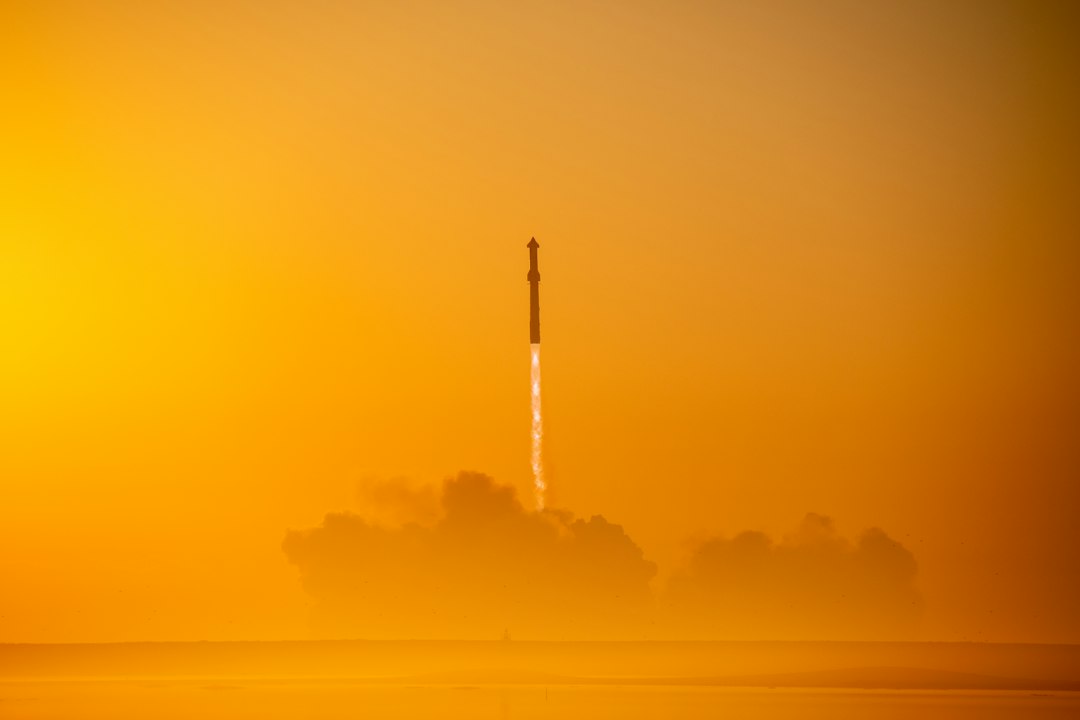
Image: Representative rocket-launch photograph; it does not depict the Flight 15 catch.